

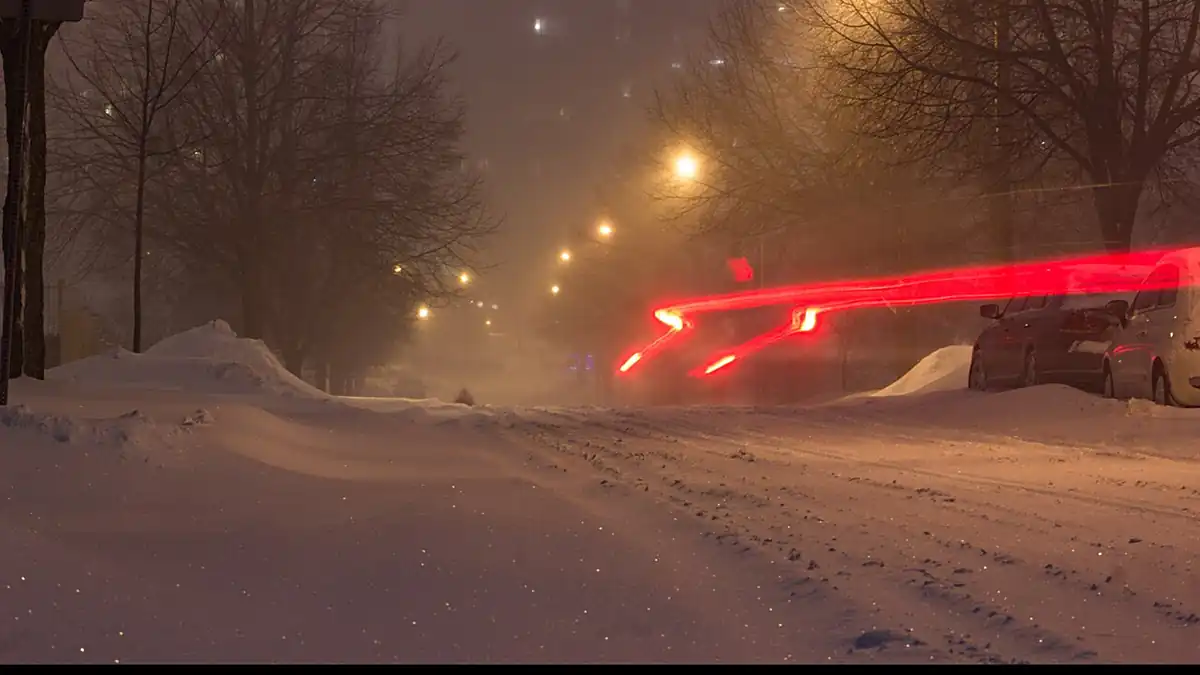
A winter storm that swept into the Greater Toronto Area late on Jan. 14 dumped more than 20 centimetres of snow at Toronto Pearson by Thursday afternoon, Jan. 15. Under an orange snowfall warning, airlines cancelled more than 250 flights at Pearson by mid-afternoon and delayed hundreds more, disrupting travel across North America.
The storm arrives
The system moved in late Wednesday and intensified through Thursday, bringing the heaviest snowfall of the season so far to the Toronto area. Environment Canada placed the city under an orange snowfall warning — the second-highest tier in its colour-coded alert system, signalling severe weather likely to cause significant damage or disruption.
By early afternoon, roughly 12 centimetres had already fallen at Pearson, and the airport later confirmed more than 20 centimetres had accumulated there. Snow fell heavily at times, visibility dropped, and gusting winds blew snow back across surfaces crews had just cleared. Pearson said its teams were running continuous loops of the airfield to keep runways, taxiways and aprons usable, with every departing aircraft going through de-icing.
Canada’s biggest airport slows to a crawl
The effect on the flight schedule was severe. By 3 p.m. Thursday, flight-tracking service FlightAware was reporting more than 250 cancelled flights at Pearson and more than 300 delays — roughly a quarter of the airport’s daily schedule cancelled at that point in the day. By the end of the day, counts reported by Travel Market Report put cancelled departures at 188 with 260 departures delayed, and more than half of all flights through Toronto affected in some way.
Air Canada accounted for the largest share of the disruption, with its mainline, Rouge and Jazz operations all heavily hit, and it cancelled its entire schedule at Billy Bishop Toronto City Airport. WestJet and Porter also cancelled dozens of flights. The storm’s reach extended well beyond Toronto: Montreal-Trudeau reported 25 cancelled departures and 144 delays, and Ottawa and other airports saw higher-than-normal disruption, while problems at major U.S. hubs compounded the mess for connecting passengers.
Pearson told passengers conditions were improving by late afternoon but advised everyone to check flight status before heading to the airport, warning that arriving and departing flights would continue to be affected.
Ripple effects into Friday
The cleanup outlasted the storm. On Friday morning, Pearson said it expected about 127,129 travellers to move through its terminals that day, with roughly 40 per cent passing through Terminal 1 — and warned the backlog was not gone. As of 7:30 a.m. Friday, nearly 70 inbound flights and about 25 departures had already been cancelled.
Air Canada extended a travel waiver covering Pearson and several other airports, including Montreal, Ottawa, Quebec City, St. John’s and Billy Bishop, allowing affected passengers to rebook without the usual fees. With aircraft and crews out of position across the network, airlines warned that a snow day in Toronto can take days to fully unwind.
For the city itself, the storm was a reminder of how quickly a major snowfall can overwhelm even well-practised winter operations — and, with more snow in the forecast for the following night, Pearson crews were already preparing for another round before the first one had fully melted into the schedule.

