

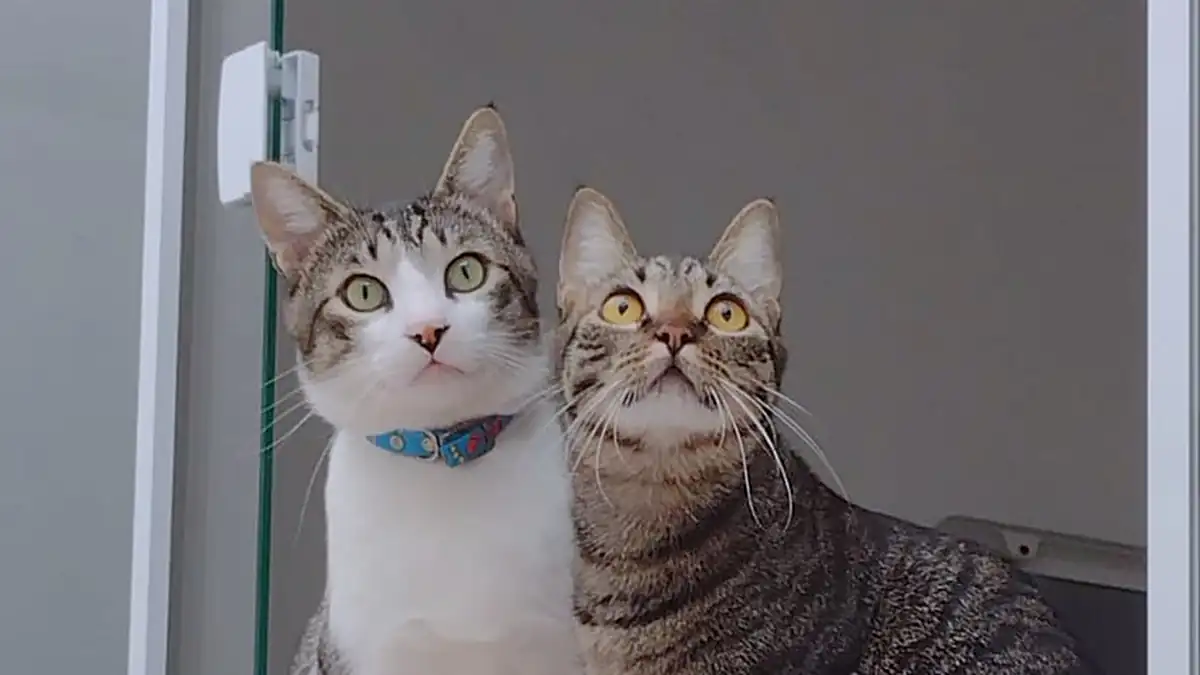
An Alberta Court of King’s Bench judge has upheld a ruling that splits four cats evenly between two former partners, two cats each. Justice Douglas Mah rejected a “best interests of the cats” test, holding that under Alberta law pets are property to be divided fairly, not children whose custody turns on their welfare.
Four cats, two people, one breakup
Kishan Singh and Reba Smith lived together for six years and acquired four cats during the relationship: Salem, Diablo, Zora and Samara. When the couple separated in March 2023, the cats became the subject of a protracted legal fight.
A trial in November 2024 divided the animals equally — Zora and Samara to Singh, Salem and Diablo to Smith. Neither side accepted the outcome, and both appealed, each arguing in effect that the court should have asked which home would be best for the cats.
In his appeal decision, cited as Singh v Smith, 2025 ABKB 715, Justice Douglas Mah dismissed that argument. Parenthood and pet ownership are not the same thing, he wrote, and Alberta courts will not import the “best interests of the child” framework into disputes over animals.
Property — but not quite like a sofa
Mah was clear that pets are no longer treated in law as purely inanimate property, and that companion animals form real emotional bonds with the people who care for them. But he concluded that a “best interests of the animal” test has no foothold in Alberta law, however much sympathy it might attract.
That does not make care irrelevant. Mah said society does not condone mistreatment or cruelty to animals, and whether someone is capable and willing to care for a pet is — and should be — a factor in determining ownership. What the court examines, though, is ownership: how the animals were acquired, who owned them, and what division of the jointly owned property is fair.
On that basis, the two-and-two split stood.
A different rule next door
The ruling throws a cross-country patchwork into relief. In British Columbia, amendments to the Family Law Act treat companion animals as family members rather than ordinary property, and courts there must consider a list of factors — including each person’s ability and willingness to care for the animal and any history of family violence — when deciding who keeps a pet after a breakup.
Alberta has made no such change. Mah noted the “best interests” approach might have a foothold in B.C., but not in Alberta, and he gave reasons for resisting it: applying a child-custody test to animals risks anthropomorphizing them, and courts dividing property need ownership evidence, not a contest over affection.
What separating pet owners should know
For couples who split up in Alberta, the practical lesson of Singh v Smith is that the paper trail matters more than the bond. Courts will look for purchase or adoption records, registration and veterinary documents, and evidence of who paid for and provided care, and they may divide animals between the parties rather than awarding all of them to one person.
Lawyers say the surest protection is a written agreement — made while a relationship is healthy — setting out who keeps which pet if it ends. Without one, Alberta courts will treat the family cat or dog the way this judgment did: as beloved, certainly, but in law, as property to be shared out fairly.

