

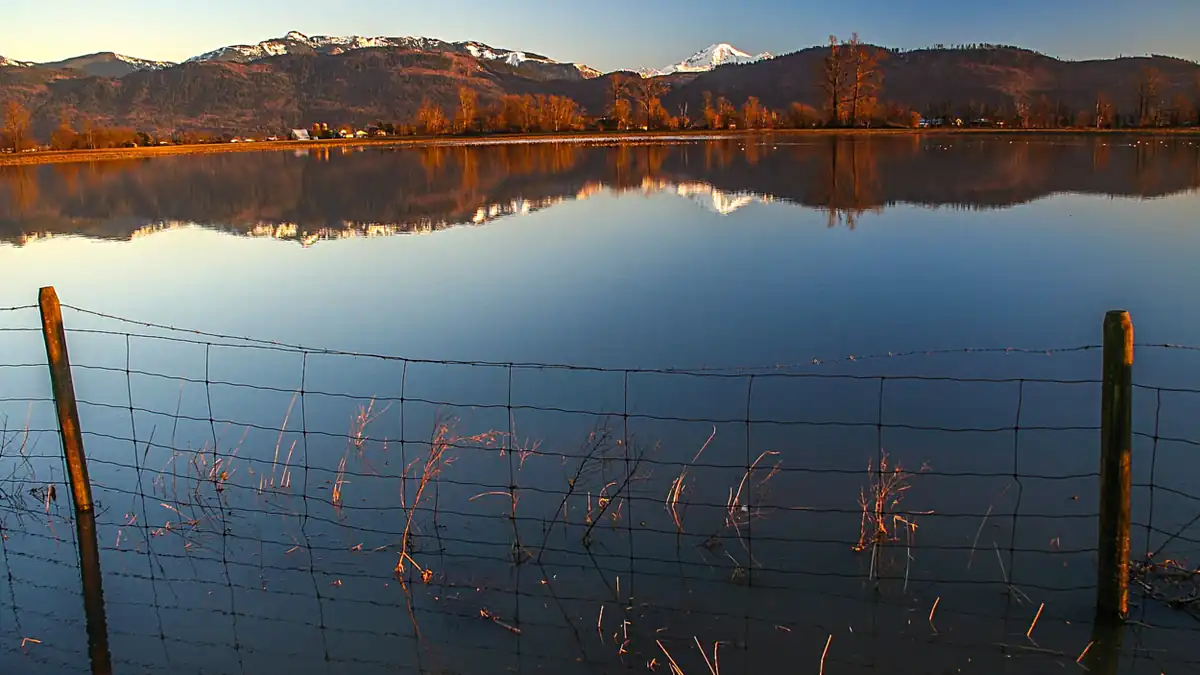
Severe weather and flooding that hit southern British Columbia and parts of Alberta in December 2025 caused close to $90 million in insured damage, the Insurance Bureau of Canada said on Jan. 16, 2026, citing CatIQ estimates. B.C.’s Fraser Valley bore the brunt, with an estimated $74 million in losses, mostly to homes and businesses.
Water across the border, again
In mid-December, floodwaters from Washington state once again poured across the U.S. border into neighbourhoods and farm fields in Abbotsford, east of Vancouver. Evacuation orders were issued and poultry barns were inundated, in an area still marked by the catastrophic flooding of November 2021. The December event brought evacuations, power outages and damage to homes and farms across southwestern B.C. and Vancouver Island, disrupting the lives and livelihoods of thousands of people.
The Fraser Valley accounted for the vast majority of the insured losses — $74 million of the nearly $90 million total — concentrated in homes and businesses.
An ‘underfunded’ flood strategy
The Insurance Bureau of Canada used the estimate to press the province on the flood strategy B.C. developed after the 2021 disaster, saying it “remains underfunded.” The bureau called on the government to prioritize flood risk mapping, protective infrastructure and incentives to help households and businesses ready their properties.
“Severe weather and flooding has once again disrupted the lives of residents and business owners across Southwestern BC and Vancouver Island,” said Aaron Sutherland, the bureau’s vice-president for the Pacific and Western regions. “Coming just four years after the devastating 2021 floods, this most recent flood damage is a painful reminder of the need to build BC’s resilience and better protect communities from the new weather reality we face.”
Sutherland argued prevention is cheaper than rebuilding: funding risk reduction and mitigation, he said, would also expand access to flood insurance, “which provides much more robust support than the government disaster assistance that high-risk homeowners are forced to rely on today.”
B.C. Emergency Management Minister Kelly Greene responded that the province remains committed to helping hard-hit communities including Abbotsford, Merritt and Princeton recover and protect themselves — but that Ottawa is a critical funding partner that “has not joined B.C. in supporting these communities in their recovery efforts.”
Four years after the big one
The December bill is modest next to the event that prompted the flood strategy in the first place. The November 2021 atmospheric river caused more than $675 million in insured damage — B.C.’s costliest severe weather event — washing out roads, bridges and railways, flooding farms under up to two metres of water, forcing nearly 15,000 people from their homes at the peak and killing five people in landslides and flooding.
That is the arithmetic behind the bureau’s warning. A mid-sized December flood still cost insurers nearly $90 million and put water back into the same Fraser Valley communities, four years after the province promised a strategy to protect them. The bureau’s message, echoed each time the valley floods, is that the strategy exists on paper; the December damage is what it looks like before it is paid for.

