

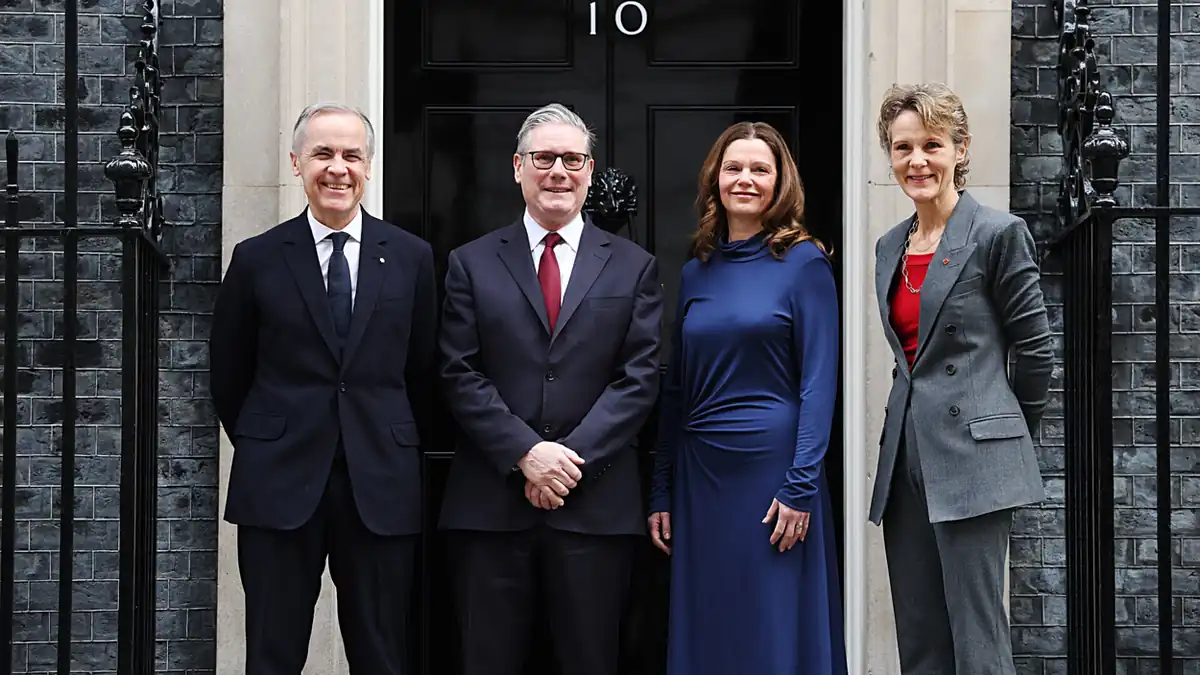
Prime Minister Mark Carney says the electric vehicle agreement he signed with China is an opportunity for Ontario and its autoworkers, not a threat. Speaking in Doha on Jan. 18, he said Chinese automakers have shown explicit interest in partnering with Canadian companies to build affordable EVs in Canada.
A quota, a lower tariff, and a canola reprieve
Carney and Chinese President Xi Jinping signed the agreement in Beijing on Friday. Canada will admit up to 49,000 Chinese electric vehicles a year at a tariff of 6.1 per cent, down from the 100 per cent surtax Canada imposed alongside the United States in 2024. Half of the imported vehicles must carry an import price under $35,000 by 2030.
In exchange, China will cut its tariff on Canadian canola seed from 84 per cent to about 15 per cent on March 1, and drop tariffs on canola meal, lobster, peas and crabs until at least the end of the year. There was no relief for canola oil, which still faces a 100 per cent tariff, or for pork, which remains at 25 per cent.
Carney described the arrangement as a controlled trial stage for market entry. “We’ve had direct conversations directly from the Chinese companies … with explicit interest and intention to partner with Canadian companies,” he told a Sunday news conference in Doha. “This is an opportunity for Ontario. It’s an opportunity for Ontario workers, opportunity for Canada, done in a controlled way with a modest start.” He said any Chinese production in Canada would have to meet Canadian labour standards, and that Canada wants to compete in the auto market of the future, not of 2000 or 2010.
Ford and Unifor call it a self-inflicted wound
Ontario Premier Doug Ford, who was not consulted in advance, warned the deal risks flooding the market with cheap Chinese EVs without guaranteed Canadian investment. “Worse, by lowering tariffs on Chinese electric vehicles this lopsided deal risks closing the door on Canadian automakers to the American market, our largest export destination, which would hurt our economy and lead to job losses,” Ford said.
Unifor national president Lana Payne called the agreement a “self-inflicted wound” on an industry already battered by U.S. tariffs, arguing that experience in the United Kingdom and Brazil shows Chinese brands seize market share quickly once admitted. Former diplomat Michael Kovrig, now with the International Crisis Group, described the bargain as “asymmetric coercion,” noting China’s canola tariffs were costing Canada billions while few Canadians were buying Chinese-made EVs.
One unlikely voice approved: U.S. President Donald Trump commended Carney for the deal, saying if you can get a deal with China, you should do it.
The dispute escalated within days
Carney’s Doha defence did not settle the argument. On Jan. 21, Ford stood with Canadian Vehicle Manufacturers’ Association president Brian Kingston, auto parts association president Flavio Volpe and Payne to call on Canadians to boycott Chinese-made EVs altogether, and to demand federal measures that lower the cost of investing in Canadian plants and research.
Ford said he does not believe Chinese automakers will ever build vehicles in Canada, as Carney has suggested — setting up a direct test of the prime minister’s claim in the months ahead.

