

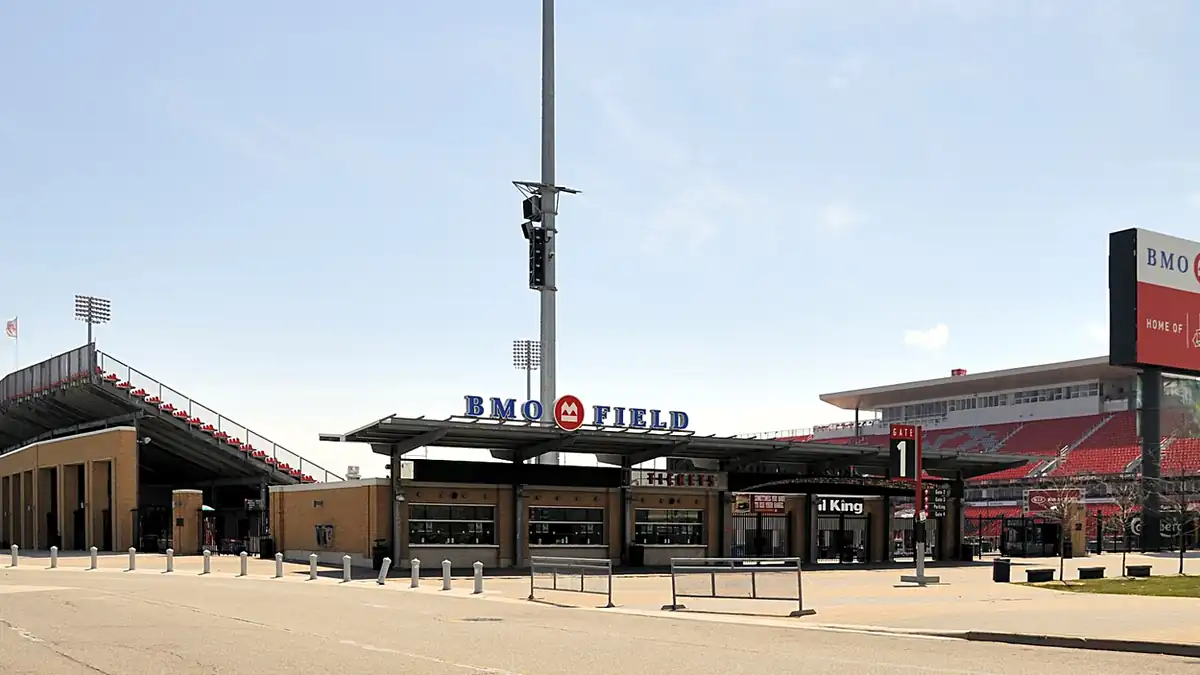
Emergency physicians in Toronto and Vancouver are warning that Canada’s already-overloaded emergency departments could buckle this summer when the FIFA World Cup brings hundreds of thousands of visitors. A CMAJ editorial by Dr. Catherine Varner calls for an urgent national plan to add hospital beds and train staff.
A system already in “constant surge”
Toronto and Vancouver will host a combined 13 World Cup matches over four weeks in June and July 2026, drawing an estimated 300,000 visitors to Toronto alone, with hundreds of thousands more attending overlapping events such as the Luminato Festival, Pride Toronto and NXNE. The final Toronto match coincides with the Pride festival, the second largest in the world.
The problem, Dr. Catherine Varner writes in the Canadian Medical Association Journal, is that there is no slack to absorb them. Canada’s health systems run in what she calls a constant state of surge capacity, and this winter’s flu season has again left emergency departments across the country facing huge volumes and long waits.
“Canada is increasingly vulnerable to events that may result in a surge in health care utilization, including climate emergencies, mass gathering events, infectious diseases outbreaks, and global defense escalations,” writes Varner, an emergency physician in downtown Toronto and CMAJ’s deputy editor.
She speaks from fresh experience: Varner worked during Games 1 and 7 of the 2025 World Series in Toronto. “I worked games 1 and 7 of the World Series when our hospital had one [ICU] bed available,” she said in an interview. “I don’t think that type of situation should be allowed when we have 300,000 visitors in our city over a 1-month period.”
History says the surge is real
The editorial marshals a sobering record. A measles strain introduced during the 2010 Vancouver Olympics led to an outbreak of 82 cases in the three months after the Games. Research on the Calgary Stampede shows increases in emergency visits tied to trauma, substance use and minor injuries, and studies of past World Cups have found spikes in cardiac emergencies on match days. Food-borne illness and alcohol overconsumption add steady pressure during any mass gathering.
Looming over the planning is the possibility of a mass-casualty attack like the vehicle ramming at Vancouver’s Lapu-Lapu Day festival on April 26, 2025, which killed 11 people and injured nearly 30. Both host cities are running mass-casualty simulations with hospitals and emergency services, and plan to use wastewater surveillance to detect infectious disease outbreaks early. Public Health Ontario has rated measles, food-borne illness and COVID-19 as moderate risks for the tournament period.
The ask: a national plan, not just local planning
Varner acknowledges that organizers are planning for a range of scenarios with local and provincial health and emergency authorities. Her argument is that local planning cannot fix a national shortage of beds and people.
“A coherent, feasible, actionable, and national plan is urgently needed to increase hospital beds and train the required personnel such that quality of care can be maintained,” she writes.
With roughly five months between the editorial and kickoff, the warning is pointed: the visitors are coming whether the wards are ready or not.

