

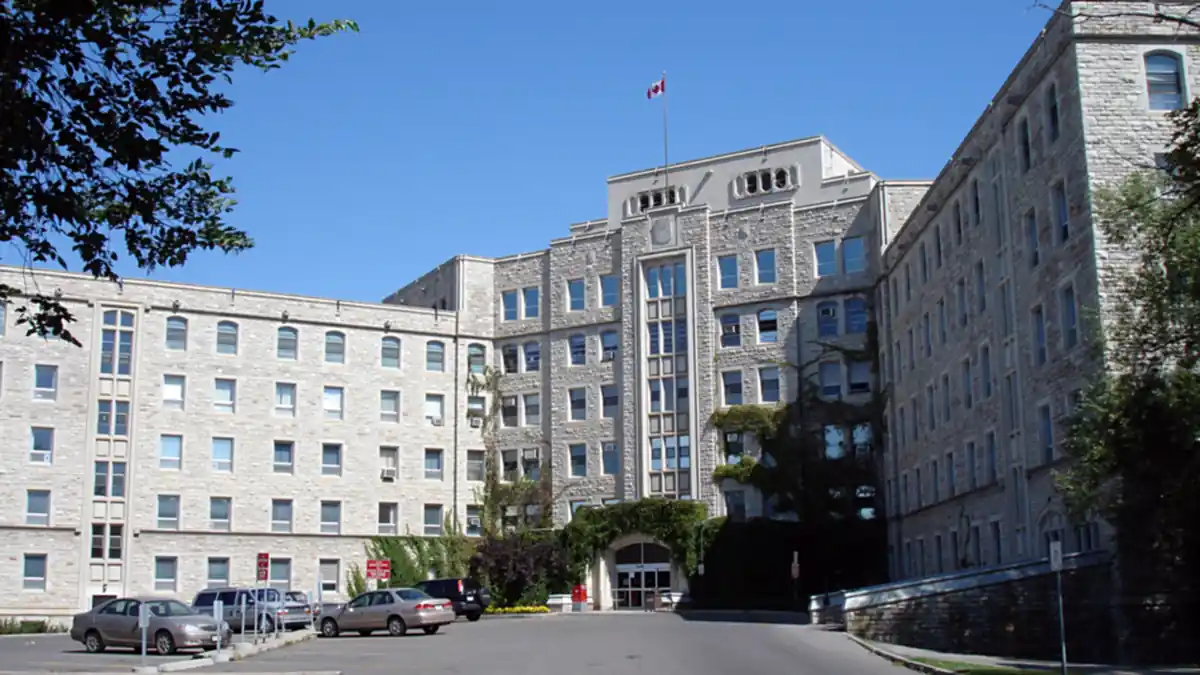
Saskatchewan’s only PET/CT scanner, in Saskatoon, cancelled 51 appointments on Dec. 23 and 24, 2025, and ran at about half capacity after production problems cut its supply of radioactive tracer, the Saskatchewan Health Authority confirmed Jan. 6, 2026. One patient’s family called the disruption “irresponsible.”
The province’s only scanner, running at half speed
The Saskatchewan Health Authority said Tuesday that its PET/CT scanner in Saskatoon — the province’s only such device — was down for two days in December and still wasn’t running at full capacity.
The problem wasn’t the machine. The authority said unexpected production problems in late December hit the facility that supplies the scanner with fludeoxyglucose, the radioactive tracer injected into patients so the scanner can light up cancers and other diseases inside the body. Without the tracer, PET/CT scans could not be performed at all, and 51 appointments were cancelled on Dec. 23 and 24.
“The PET/CT scanner remains mechanically functional. The disruption was solely related to the availability of (the tracer),” the authority said.
As of Dec. 29, the authority had secured a temporary supply from Ontario, allowing scans to resume at about half the regular capacity. “Imaging teams are prioritizing the most urgent cases while working to reschedule remaining patients as additional supply becomes available,” it said. “We acknowledge the impact this has on patients waiting for medical imaging.”
“That is irresponsible”
The disclosure came the same day the Opposition NDP raised the machine’s status — alongside Erin Neufeld, whose 76-year-old father had been scheduled for a scan this week to determine the scope of his lung cancer. His appointment was cancelled, and the family was given no timeline for a new one.
“(I was told) this is the only (machine) in the province. And I just thought to myself, that is irresponsible,” Neufeld said. “We are a province that deserves our health care, we pay for our health care and we should have adequate testing for these patients.”
“Every day that he doesn’t get … his treatment started, it is one less day I may get with him. I’m not satisfied with that,” she said.
Keith Jorgenson, the NDP’s associate health critic, called the situation “absolutely appalling.” “It shocks me that the ministry was unaware of this and has made no plan in terms of how to accommodate the people who are missing this test,” he told reporters. Jorgenson said the government needs contingency plans for when the scanner can’t be used: “I’m not an oncologist, but if I had one of the most deadly forms of cancer, I would not want to wait 70 days to start treatment.”
A tracer that can’t be stockpiled
PET/CT scans occupy a fragile corner of the health system. The tracer, fludeoxyglucose, is radioactive and decays within hours, so it must be produced in a cyclotron facility and used the same day — it cannot be warehoused against a breakdown. Saskatchewan built its own supply for exactly that reason: the Saskatchewan Centre for Cyclotron Sciences in Saskatoon has produced radioisotopes for Royal University Hospital since 2016, ending an era when the tracer was shipped in from Hamilton, Ont. A production failure, wherever it occurs in that chain, leaves the province’s only scanner with nothing to scan with.
Nor was this the first disruption. Internal emails obtained by the NDP through access to information show the machine was out of service for some days in 2017 and 2018 because of equipment issues, and the Opposition had raised an earlier closure only months ago, when a patient’s Saskatoon scan was cancelled amid staff and tracer shortages and the government declined to pay for a scan in Calgary, where production facilities also operate.
The province has said the scanner is crucial for diagnosing cancer and other conditions because of its highly effective specialized internal imaging; MRI, CT and X-ray scans are more widely available but answer different questions. In 2024, the province announced it is planning an upgraded diagnostic lab in Regina that would include a second PET/CT scanner — a project that, once built, would end Saskatchewan’s reliance on a single machine.

