

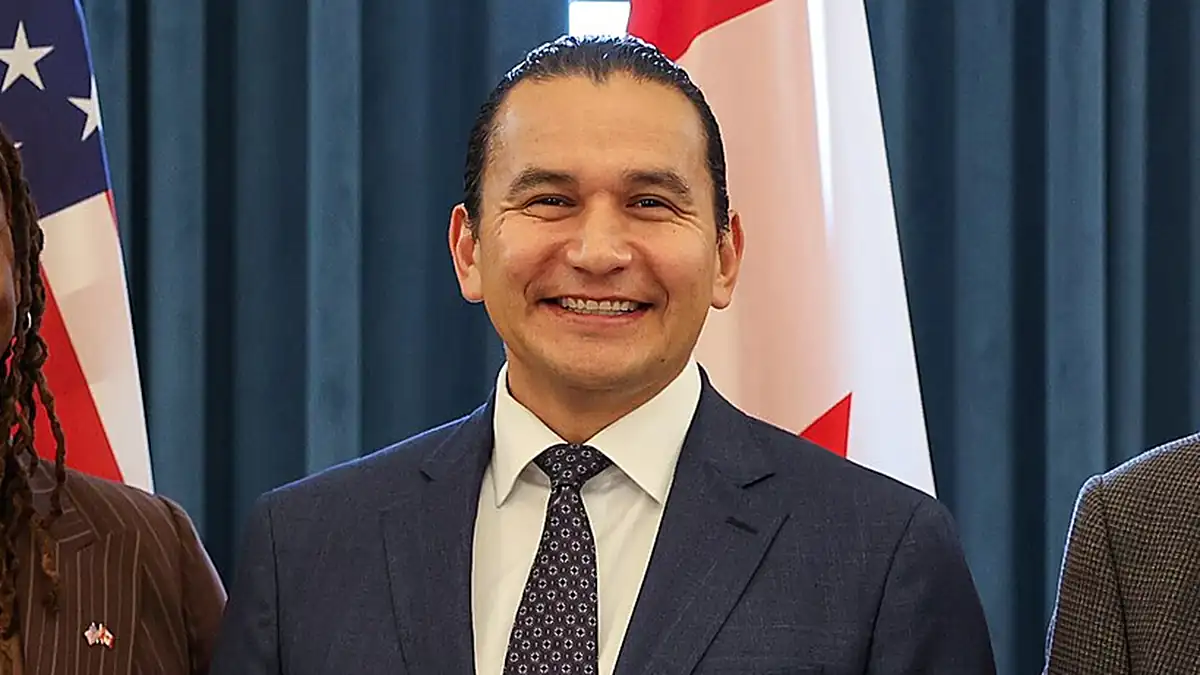
Manitoba will not administer the federal government’s gun buyback program for banned assault-style firearms. Justice Minister Matt Wiebe set out the province’s position in a statement this week, and Premier Wab Kinew defended it on Jan. 15, saying the federal program does not appear to be very efficient or well run, and would not make communities safer.
Kinew defends the decision
Asked by reporters and activists why Manitoba would not take part, Kinew was direct: “We’re not going to be participating with the federal government’s gun-buyback program.”
He said federal officials had been in back-and-forth contact with provincial justice officials, and that the province had decided not to help run the scheme. Pressed on the program itself, he added: “This is a federal-government program that doesn’t appear to be very efficient, doesn’t appear to be well run. And so for us looking at that, why would we want to take on that whole headache?”
Kinew confirmed the province had been asked to administer the program, and said the federal approach to the provinces had been fairly standard. Manitoba’s objection, as he framed it, was practical rather than philosophical. He said he was open to a conversation about firearms policy, but not to delivering this program.
On public safety, the premier drew a distinction between the buyback and enforcement against crime. Taking weapons from criminals and from people causing violence in the streets is something he supports, he said, but he argued this program would not achieve that end and would instead create problems around administration and cost.
Wiebe’s statement set the position
The premier’s comments followed a statement from Justice Minister Matt Wiebe earlier in the week saying Manitoba will not administer the federal initiative, known formally as the Assault-Style Firearms Compensation Program.
The position, shared publicly by the Canadian Coalition for Firearm Rights on Jan. 15, also noted that Kinew is a gun owner who understands the legal, legitimate uses of firearms. Kinew did not dispute that framing when reporters raised hunting with him, but he returned repeatedly to the same point: whatever Manitobans think about firearms legislation in general, this specific federal program is, in his government’s view, not a good one to get involved with.
Manitoba’s stance is a refusal to administer, rather than a legislative block. Asked whether that description was accurate — not opposing the program outright in the way Alberta has, but not helping to run it either — Kinew agreed: “I think that’s right.”
Where Manitoba sits among the provinces
Manitoba joins a growing list of provinces declining to deliver the program. Alberta unveiled its plan to fight the buyback at the end of last year, and Saskatchewan has changed its firearms legislation to require fair market value, as determined by its firearms commissioner, when a firearm is seized under federal law. Ottawa has confirmed that because of the Alberta and Saskatchewan legislation, the program will not run in those two provinces, although residents there can still file declarations.
Quebec, by contrast, has been the province most supportive of the federal approach, a difference that has shaped the program’s politics since Ottawa banned roughly 2,500 makes and models of assault-style firearms beginning in 2020.
What happens next for Manitoba gun owners
Manitoba’s refusal does not change the law for individual owners in the province. When Ottawa unveiled the next steps of the national program on Jan. 17, it said the declaration period would open the following Monday and run until March 31, with owners able to declare through an online portal or by paper. The compensation pool is $248.6 million, enough, officials estimate, for about 136,000 banned firearms, paid on a first-come, first-served basis.
The amnesty for possessing banned firearms ends on Oct. 30, 2026. After that date, owners who have not complied could face criminal prosecution. Owners who do not take part in the buyback can instead deactivate a firearm at their own expense, surrender it to police without compensation, or export it with a permit.
Federal officials also pointed to a warning sign from the program’s test run. A six-week pilot in the Cape Breton region of Nova Scotia last fall was expected to collect about 200 firearms. It collected 25, from 16 participants — a result Manitoba’s government could point to as it argued the national program is not ready for provinces to deliver.

