

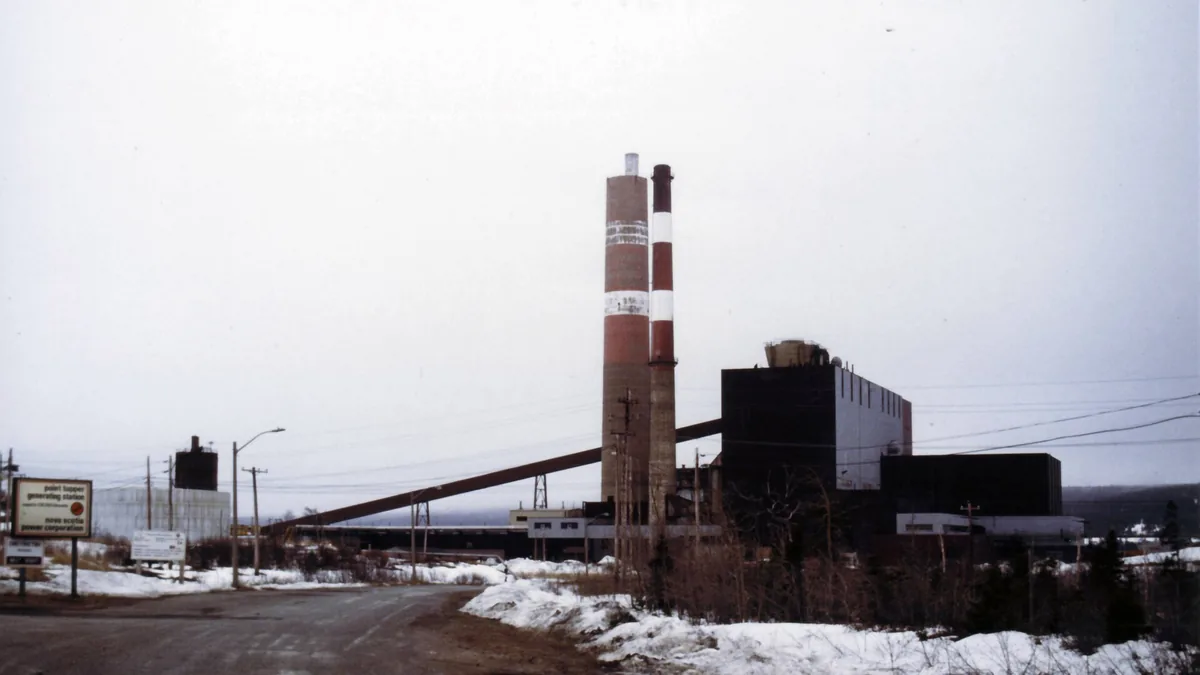
One week after EverWind announced a proposed data centre campus at Point Tupper worth more than $10 billion, the Nova Scotia data centre debate has become a contest between two sets of numbers: the company’s promised jobs and tax revenue, and the project’s projected draws on provincial power and water.
What EverWind is proposing at Point Tupper
EverWind, a Nova Scotia energy company that owns the Point Tupper terminal near Port Hawkesbury, announced the plan on Friday, Oct. 16. More than $8 billion would build a data centre campus at its Point Tupper site, and a further $2 billion would advance four onshore wind projects. The campus would begin with a 95-megawatt phase in late 2027, followed by a 325-megawatt expansion targeted for 2028, for 420 megawatts. EverWind said a leading frontier AI developer had signed a long-term lease for the first phase, and Anthropic confirmed the same day it is the tenant, on a 20-year lease — its first data centre agreement in Canada. Nothing has been approved: the expansion remains subject to commercial, technical and regulatory conditions, and Richmond County has not received a building permit application, according to Global News.
The benefits case rests on the company’s projections
EverWind calls the portfolio the largest privately funded investment in Nova Scotia history. It says the build-out would support about 2,000 construction positions and 215 permanent positions, with permanent data centre jobs paying between $135,000 and $185,000 a year. Davis Pier projections prepared for the company estimate roughly $2 billion in provincial GDP during construction and about $1.5 billion in corporate income tax over an initial 20-year term. The company also promises a community benefit program worth tens of millions of dollars, and says a First Nations consortium led by the Membertou Development Corporation is negotiating an ownership stake in the campus. Premier Tim Houston endorsed the announcement as “the kind of responsible growth that helps build a stronger, more prosperous future for Nova Scotians.”
Power and water are where the Nova Scotia data centre debate turns
At 420 megawatts, the finished campus would equal roughly one-seventh of Nova Scotia’s total generating capacity of close to 3,000 megawatts, a comparison CBC News drew at the announcement. The Ecology Action Centre notes the campus would draw grid power until the new wind projects are built. EverWind says it will fully fund the grid costs attributable to the project so they are not passed to ratepayers.
The campus would draw water from Landrie Lake, Port Hawkesbury’s drinking water source. EverWind says its closed-loop cooling system would use about 100,000 litres a day in the first phase and an average of about 500,000 litres a day at full build-out — about one per cent of the lake’s identified daily safe yield of roughly 34 million litres. Thomas McNeil, the Ecology Action Centre’s senior energy coordinator, says the issue is the gap between those expected figures and what the project’s permit allows: as he understands it, the permit allows significantly more, up to 10 million litres a day by the centre’s reading. Warden Lois Landry said the Landrie Lake Water Utility can enforce written conditions, including suspending service if the company exceeds its amount.
Opposition parties want the debate held in the legislature
More than 100 people protested in Halifax on Saturday, Oct. 17. Port Hawkesbury resident Aidan Pottie carried a sign reading “you can’t drink data,” telling Global News of Landrie Lake: “That is our drinking water, that is our shower water, that’s our cleaning water.” An opposition petition had 12,700 signatures by Monday afternoon, The Canadian Press reported. On Monday, NDP Leader Claudia Chender asked Houston to recall the legislature, arguing the government embraced it without public input or dedicated regulations. “Non-binding guidelines are not laws,” Chender said. “This project needs to be regulated in the legislature, not on Facebook.” Liberal MLA Becky Druhan backed an emergency sitting. Houston defended the process, saying existing approval processes would apply and any agreement would protect household power rates.
The premier’s own position moved quickly: in June he said the discussion was far in the future, to wait until major energy projects such as Wind West were complete, yet by late September he was open to proposals that protect water and ratepayers — a shift he defended on Oct. 15, the day before the announcement, citing geopolitics and Ottawa’s data sovereignty positioning. Nova Scotia set offshore wind fees in new law earlier this year as it courts buyers for Wind West power. The electricity-system studies have not reported, and EverWind is expected to hold community engagement sessions in the area in early November. Until those steps produce enforceable terms on grid costs and water limits, the $10-billion figure remains a proposal, not an approval.

