

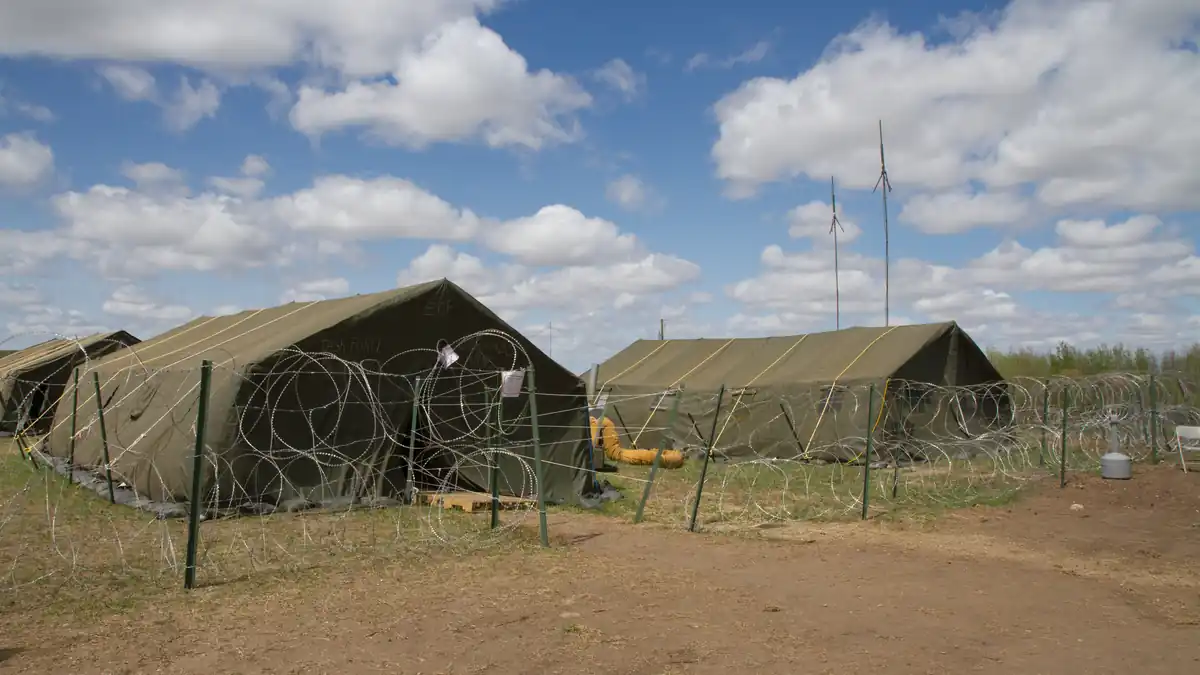
Four Canadian Armed Forces members were killed and 39 injured when a fire that began on a grenade launcher range at CFB Wainwright, Alberta, during live-fire training on October 17 raced into their position after the wind shifted. Officials have since confirmed the fire’s origin and opened three investigations, but how it ignited, and why training went ahead, remain unanswered.
What happened on October 17
The soldiers belonged to the 3rd Battalion, Princess Patricia’s Canadian Light Infantry, part of 1 Canadian Mechanized Brigade Group, and were taking part in Exercise APOLLO SHOOTER at CFB Wainwright, east of Edmonton. At about 4 p.m. MDT on Saturday, October 17, a fire ignited during live-fire training, and high winds drove it across the range until it overtook the unit’s administrative area. About 84 soldiers from Charlie Company were training at two locations that afternoon, one of them a grenade range.
The battalion had been preparing for a rapid-deployment role, including a mission next spring to reinforce Canadian troops in Latvia. Prime Minister Mark Carney called the fire one of the worst peacetime tragedies for the Canadian Armed Forces on home soil, and flags on federal buildings were lowered to half-staff.
What officials have confirmed
The military confirmed the four deaths on October 18 and named the fallen: Sergeant Morgan Wong of Edmonton, a reservist with the Loyal Edmonton Regiment serving with the battalion; Private Shaun Farrell of Prince Albert, Saskatchewan; Private Aidan Goulding of North Vancouver; and Private Hayden Lykkemark of Langley, British Columbia. All four were based in Edmonton with the 3rd Battalion, and their families had been notified.
On October 22, Brigadier-General Vanessa Hanrahan, the Canadian Forces Provost Marshal, confirmed where the fire began. Based on the information available, a fire was reported on the automatic grenade launcher range on October 17 and started during routine military training activities. The fire stayed within Permanent Danger Area 2 of the range. Because of the risk in that zone, firefighters could not attack it directly; it was monitored through the day instead. A change in wind direction and speed then sharply increased the fire’s intensity and carried it into the training area.
Officials have also confirmed there is no indication that natural gas infrastructure was involved in or affected by the fire. On the injured, the Forces said on October 22 that 27 members remained in hospital and 12 had been released, and about 28 civilian burn-care specialists were flown from Toronto to Edmonton that day aboard a CC-130 Hercules to support Alberta’s care of the injured.
What has not been confirmed
The Provost Marshal’s statement locates the fire, but it does not say precisely how it ignited — which firing activity or round set the grass alight has not been detailed publicly. Maj.-Gen. Wade Rutland, who commands the 1st Canadian Division, said on October 18 that investigators had not determined what ignited the fire, and he expected it would be at least a month before a cause was established.
Nor has the military explained the timeline of its decisions that day. Rutland told reporters that officials knew about the fire for hours and believed it was contained, and that training continued, before the wind shifted and the flames covered the distance to the soldiers in under a minute. Who decided the exercise should continue, what fire-risk or wind thresholds applied, and whether range procedures were followed have not been answered. The names and medical details of the injured have not been released, and no finding of fault — criminal, disciplinary or procedural — has been announced against anyone.
One family’s account
The family of Private Shaun Farrell, 23, spoke publicly at the Prince Albert Armoury on October 22. His mother, Patricia Farrell, said he had talked about joining the army from about age five. He overcame diagnoses of dyslexia and Asperger’s syndrome and graduated from high school despite a teacher’s warning that he never would. She explained the tattoo on his arm, which read: “Comfort kills dreams.”
“He wanted to be in the army,” she said. “That was his dream.” The family is arranging his funeral with the battalion, and a book of condolences has been opened at Prince Albert City Hall.
What happens next
Three investigations are now running. The Military Police are investigating independently of the chain of command to establish the facts and determine whether any criminal or service offences occurred. A separate Board of Inquiry, the military’s fact-finding process, will be held, with its terms of reference still being developed. Alberta’s chief medical examiner is responsible for the civilian investigation into the four deaths. Military officials said on October 22 that parts of the work will take more than a month. Until those processes report, the central questions about the fire at CFB Wainwright remain open.

