

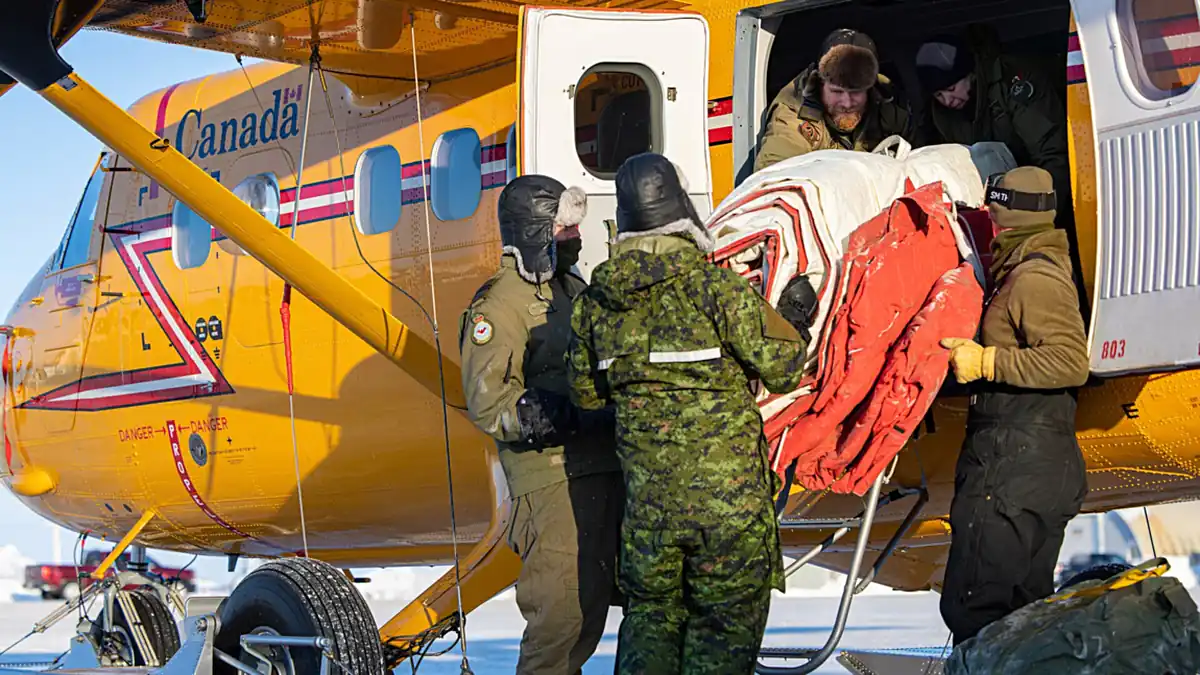
Canada is weighing whether to send a small contingent of troops to Greenland to join Danish-led military exercises, CBC News reported on Monday, January 19, 2026, citing two senior government officials. No decision had been made, and Prime Minister Mark Carney’s office declined to comment on the reports.
Plans presented, decision pending
CBC News reported Monday that contingency planning options were presented to the federal government last week, including sending a limited number of Canadian soldiers to take part in sovereignty-focused exercises organized by Denmark, aimed at safeguarding key infrastructure in Greenland. A source directly familiar with the matter told Reuters that military officials have presented plans for the operation and were awaiting a decision from Prime Minister Mark Carney.
According to the CBC report, officials cautioned that the government remained divided over the idea, weighing diplomatic risks and a possible backlash from U.S. President Donald Trump. One option under consideration would see a small Canadian contingent deployed by the end of the week, if approval were granted. Carney’s office declined to comment.
No deployment had been announced as of Monday, and the reporting describes a decision under consideration — not troops on their way.
Canadians already in Greenland
Any new contingent would not be Canada’s only military presence on the island. CBC reported that a Royal Canadian Air Force unit was already in Greenland taking part in a previously scheduled North American Aerospace Defense Command (NORAD) operation.
Canada would also not be alone among allies. Germany, France, Sweden, Norway, Finland and the Netherlands said last week they were sending military personnel to Greenland to begin preparations for larger exercises later this year, as European governments moved to show support for Denmark.
Trump’s tariff threat
The deliberations in Ottawa unfolded against an escalating campaign by Trump to bring Greenland, a self-governing territory within the Kingdom of Denmark, under American control — citing its strategic location, its mineral resources and concerns about Russian and Chinese activity in the Arctic.
On Saturday, Trump said the United States would impose 10 per cent tariffs on goods from eight European nations — Denmark, Norway, Sweden, France, Germany, the United Kingdom, the Netherlands and Finland — starting February 1, rising to 25 per cent in June, over their opposition to a takeover. The eight countries issued a joint statement on Sunday denouncing the threat and reaffirming their commitment to Arctic security.
Canada was not on the tariff list, but it is closely exposed: Trump has previously threatened to annex Canada itself, and Canadian officials are keen to show solidarity with European allies without provoking Washington.
Ottawa’s stated position
Carney addressed the dispute on Sunday in Doha. “We’re concerned about this escalation, to be absolutely clear… we always will support sovereignty and territorial integrity of countries, wherever their geographic location is,” he told reporters.
In a statement on X, he added: “As we have consistently stated, the future of Greenland is for Greenland and Denmark alone to determine.”
For Canada, the question carries a particular weight. Greenland is its closest Arctic neighbour, separated from Ellesmere Island by the narrow Nares Strait, and the two countries share a land border on Hans Island — known as Tartupaluk in Inuktitut — under a 2022 agreement that ended a decades-old territorial dispute. What happens to Greenland’s security is, in a direct geographic sense, a question about Canada’s own northern approaches.

