

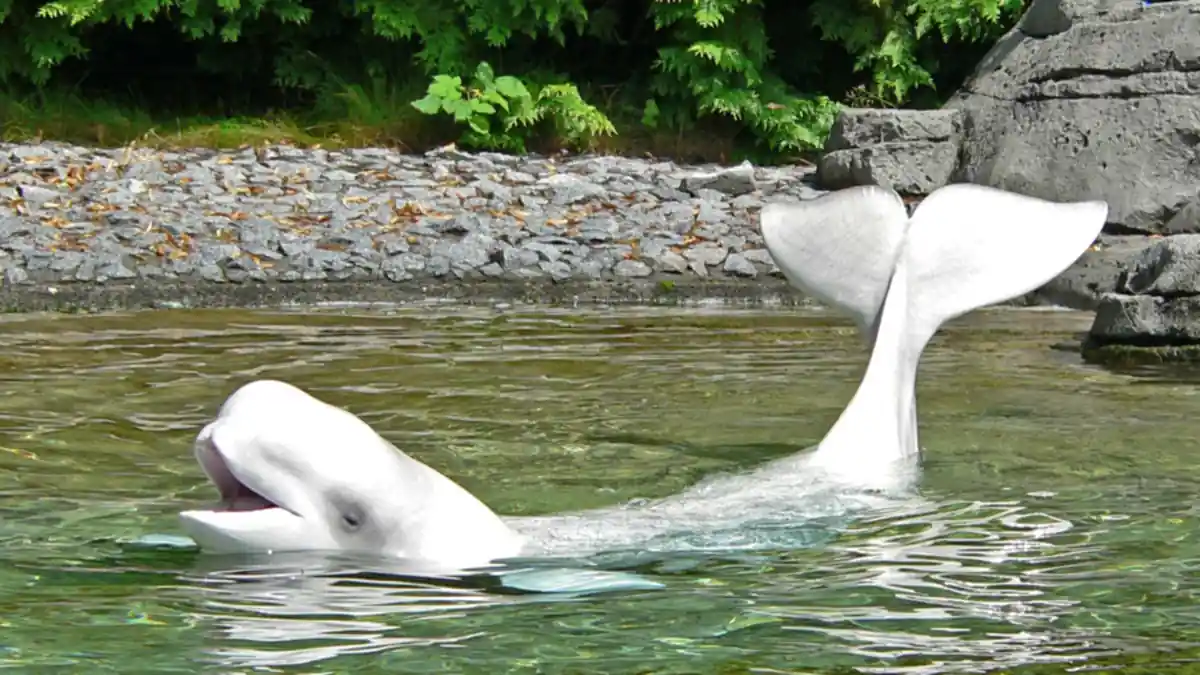
Marineland has presented the federal government with a plan to ship its 30 beluga whales and four dolphins — the last captive cetaceans in Canada — to four U.S. institutions, and sources say the shuttered Niagara Falls park gave Ottawa a deadline to issue export permits or it will euthanize the animals.
An ‘urgent rescue solution’
Marineland confirmed in a statement to The Canadian Press that it presented “a definitive and urgent rescue solution for the whales” directly to Fisheries Minister Joanne Thompson on Wednesday, Jan. 21, but it did not provide details.
“This mission now hinges entirely on the minister’s immediate authorization,” the statement said.
Marineland said Thompson did not raise questions about the plan and that her office pledged to work quickly to evaluate the export permit applications. “We now look to her to fulfil her commitment to immediate action; the survival of these whales depends solely on the swift issuance of these permits,” it said.
Thompson’s office confirmed Wednesday’s meeting. “During the meeting, the minister was presented with new export permits,” her office said in a statement. “The minister will review them expeditiously.”
The sources said a euthanasia plan for the animals has been prepared as the backup.
Four U.S. homes, one land deal
The sources say Marineland has a deal to send the whales and dolphins to four institutions in the United States: SeaWorld, Georgia Aquarium, Shedd Aquarium and Mystic Aquarium. Veterinarians from all four institutions were at Marineland last week checking on the belugas and dolphins, the sources say.
The sources describe the plan as a “rescue operation” that will split up the whales while keeping family units together; in some cases it may reunite males and females separated to comply with Canada’s no-breeding law.
The sources also say a deal to sell the Marineland land for housing and commercial use is conditional on the animals being gone.
Marineland closed its doors to the public in the late summer of 2024 while trying to sell the land it sits on near Horseshoe Falls. Its menagerie remains on site: the belugas and dolphins, seals, sea lions, bears and deer. All 30 belugas are still alive, though two males have been receiving medical treatment on and off for several months, the sources say. Twenty whales — one killer whale and 19 belugas — have died at Marineland since 2019, according to an ongoing Canadian Press tally based on internal records and official statements.
A law that left one door open
In the fall, Marineland sought to move all of its belugas to Chimelong Ocean Kingdom, an aquarium in China. Thompson denied that request, saying she would not subject the whales to a future performing in captivity.
That position is consistent with the federal law passed in 2019 — known as the Free Willy bill — which banned whale and dolphin captivity in Canada with a limited exemption for scientific research. The law did not apply to Marineland’s existing animals, which were grandfathered in. It also banned breeding, forced Marineland to split up its male and female belugas, banned performances and made it illegal to import or export marine mammals — except that the minister may approve an export if it is in the animals’ best interest.
In response, Marineland said it was quickly running out of money and asked for immediate operating funding from Ottawa. It gave the government four days to respond, saying it would otherwise begin euthanizing its belugas. Thompson didn’t blink, and that deadline came and went. The standoff became a political dispute, with Ontario Premier Doug Ford blaming the federal government while Ottawa said Ontario, responsible for animal welfare, should help.
A smaller move has precedent: in 2021 Ottawa approved the sale of five Marineland belugas to Mystic Aquarium, which flew them to Connecticut that May. Two died within a year and a third within two years; Mystic blamed pre-existing conditions. In mid-October, the Association of Zoos and Aquariums and its Canadian counterpart pledged to help, calling euthanasia “unnecessary and unjustified” while the belugas’ health allows rescue and transport.
What happened next
The reprieve came five days later. On Jan. 26, Thompson met Marineland officials again and gave conditional approval for the export permits. “It was a constructive meeting, and I provided conditional approval for export permits,” she said in a statement. “I will issue the final permits once final required information is received from Marineland.” In a letter to the park the same day, Thompson noted Marineland had warned the animals would be euthanized if permits were not authorized by Jan. 30, citing its financial strain. Ford supported the decision, saying the animals would have “a better home than where they are.”

