

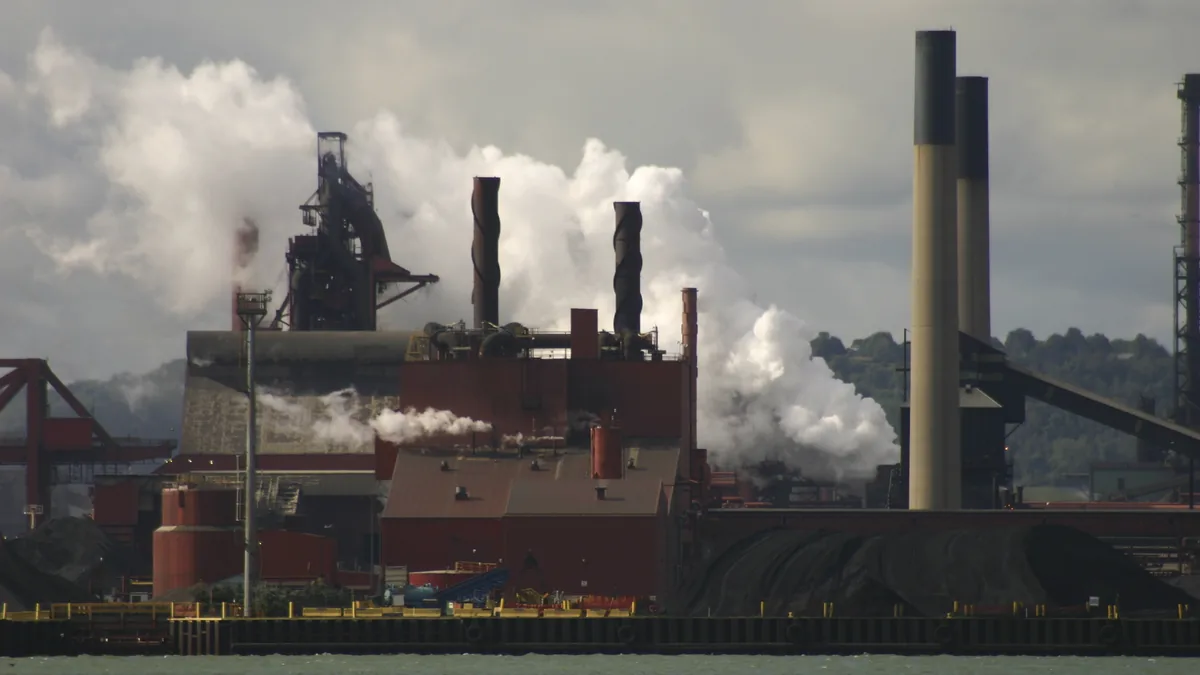
Prime Minister Mark Carney and Ontario Premier Doug Ford have unveiled a joint $8.7 billion plan in Ottawa to protect Ontario steel, auto and critical minerals industries from United States tariffs, centred on a steel fund worth more than $5 billion, $2.5 billion for auto plants and $1 billion in federal money for roads to the Ring of Fire.
A steel fund at the centre of the plan
The largest piece is a new Joint Steel Action Fund, backed by $3.55 billion from the federal government and $1.67 billion from Ontario over five years. The money is meant to help steelmakers widen what they make, so mills that sell heavily into the auto sector can also supply defence, manufacturing, energy and infrastructure projects, and find buyers overseas.
Both governments said the Buy Canadian and Buy Ontario policies will put domestic steel first in public procurement, and Ottawa promised a harder line against foreign steel dumping, with stronger border enforcement. A new Canada-Ontario Steel Task Force will advise on the measures, starting with steel shipping costs.
Carney said the steel money is intended to protect more than 100,000 jobs, pointing to steelworkers in Hamilton and Sault Ste. Marie. The industry supports more than 23,000 direct jobs in Canada and underpins roughly 172,000 jobs in fabricated metals.
Auto money, and a pause on emissions rules
For automakers, the two governments committed another $2.5 billion over two years, split $1.5 billion federal and $1 billion provincial, for large-scale capital projects: newer machinery and upgraded lines to build connected and electric vehicles. A joint Automotive Task Force will oversee the work. The sector supports more than 120,000 direct jobs.
The plan also freezes Canada’s greenhouse gas emissions standards for new light-duty vehicles at 2026 levels through the 2029 model year, giving manufacturers short-term flexibility, before annual increases resume in the 2030 model year. The funding builds on the federal auto strategy launched in February, which set aside $3 billion for the sector, a strategy this site covered when Ottawa restored purchase rebates and dropped its EV sales mandate.
Roads to the Ring of Fire
The third piece looks north. Ottawa will put up to $1 billion over three years toward road infrastructure for the Ring of Fire critical minerals region in northern Ontario, matching an initial Ontario investment of up to $1 billion over the same period. The two governments also promised one coordinated permitting process instead of two overlapping ones, and a joint working group for consultation with First Nations.
Carney tied the mining roads to the rest of the package: critical minerals feed the steel and auto plants the plan is trying to protect, and he put the opportunity linked to the Ring of Fire at 70,000 jobs. Ford has argued the region’s minerals could add $22 billion to Ontario’s economy.
Why Ontario was first in line
Ontario is where the tariff war lands hardest. Its steel mills and auto plants were built around cross-border trade: steelmakers sell much of their output into the auto sector, and vehicle production moves parts across the border at several stages. A 50 per cent American duty on foreign steel, imposed last year, therefore hits the province twice — once at the mill and again on the assembly line. The pressure is already visible in Hamilton, where Ottawa is in a public dispute with Stelco’s American parent, Cleveland-Cliffs, over planned layoffs, and says legal action is among the options being examined.
Ford’s Ontario has been at the front of that fight all year, from his call to boycott Chinese electric vehicles after the federal deal with Beijing to the province’s anti-tariff advertising in the United States.
Both leaders say there is no going back
At the Parliament Hill announcement on Wednesday, Carney said American tariffs had upset a trade bargain that had lasted for decades, raising costs for American families and leaving Ontario workers under a cloud of uncertainty. Canada, he said, will focus on what it can control at home. Ford called the agreement transformative and said the relationship with the United States has changed permanently, no matter who sits in the White House.
The two governments put the total protected employment at about 220,000 jobs across the industries covered. Ottawa also noted it has already provided more than $25 billion in tariff-related support to workers and businesses. No application windows or project lists were announced on Wednesday; the task forces and the funds themselves are the machinery the two governments say will follow.

