

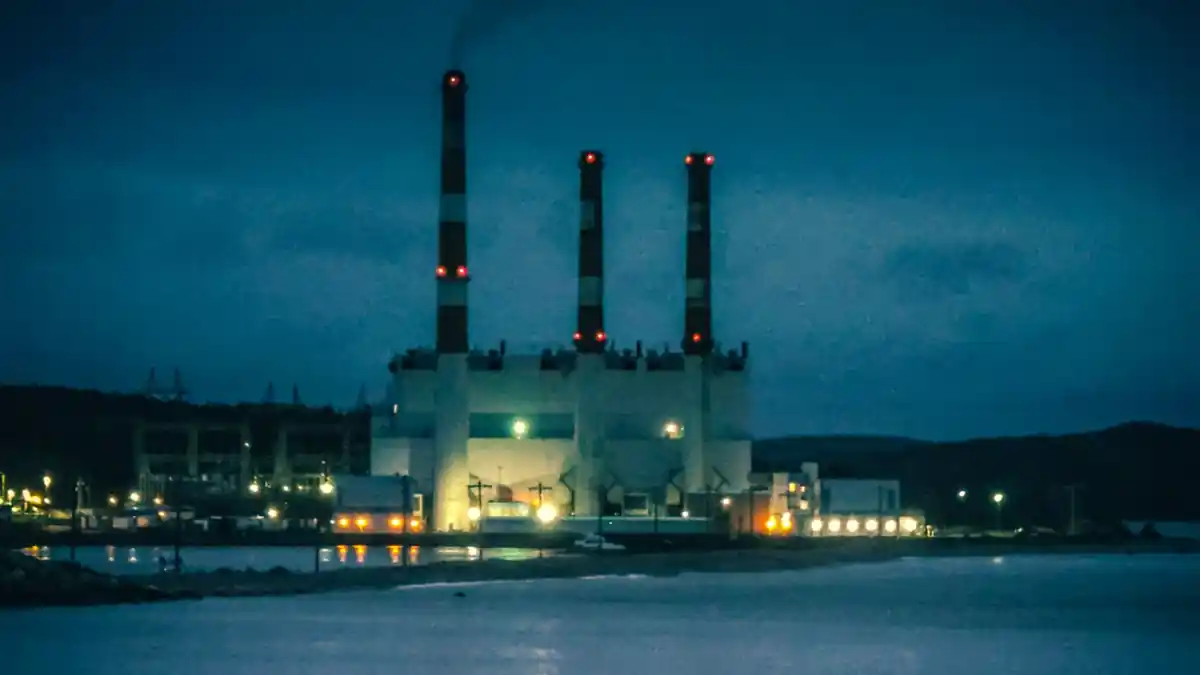
Newfoundland and Labrador Hydro put the island under a rare power warning on Saturday, Jan. 24, 2026, after frazil ice forced all seven generating units at the Bay d’Espoir hydroelectric station offline — the plant’s first complete shutdown since 1967 — leaving the grid close to its supply limit.
First full shutdown since 1967
Hydro advised island customers that a power warning would take effect at 6 a.m. Saturday, meaning electricity supply was getting close to maximum capacity and rotating outages were possible. Customers were asked to conserve — by turning back the heat a few degrees, limiting hot water use and switching off unnecessary lighting — particularly during the morning and suppertime peaks.
In an update Saturday afternoon, the utility explained why the system was so tight. Crews had spent the previous 48 hours dealing with frazil ice at Bay d’Espoir, the island’s largest hydroelectric plant.
“As a result, for the first time since 1967, there is no electricity being generated at the plant,” Hydro said. “This is a significant and important part of our energy system, serving customers all across the Island.”
Frazil ice is a slushy ice that forms in cold, windy conditions in rivers and lakes. It can clump together, stick to obstructions and clog the water intakes that feed a generating station. Hydro said the phenomenon is normal in many parts of the province but incredibly rare at Bay d’Espoir, which made the timing — in the middle of a cold snap, when demand was high — especially difficult.
A warning level not used in a decade
The episode escalated through Hydro’s public alert system, created after the January 2014 supply crisis remembered in the province as “DarkNL.” A power watch, the lower alert level, began on Jan. 22 as icing reduced capacity at the plant and problems at the Holyrood thermal generating station added pressure. By Saturday, with supply approaching the system’s maximum, Hydro moved to a power warning.
“This is the first time since 2019 that we’ve activated a Power Watch and 2016 since we’ve issued a Power Warning,” the utility said.
To keep the lights on, Hydro drew more energy over the Labrador-Island Link, called on capacity agreements and imported power from partners in Atlantic Canada over the Maritime Link. Standby generation was also pressed into service. Hydro warned that outages could occur quickly and without warning, and that the next step, if conservation fell short, would be a power emergency requiring short rotating outages of less than an hour.
Regulator later demands answers
The immediate crisis eased over the following days: six of the seven Bay d’Espoir units were returned to service on Jan. 25, the warning was lifted that evening, and the seventh unit was back by Jan. 31, once ice cover had formed on the reservoir and forebay.
But the event drew lasting scrutiny. The Board of Commissioners of Public Utilities wrote to Hydro in March directing it to file a report on the frazil ice event by April 30, 2026. The regulator asked how and when Hydro became aware of the risk of frazil ice formation at the plant, for a timeline of the derating and shutdown decisions, for details of the monitoring technology and operating practices in place at the intakes, and for the costs incurred — including whether Hydro expects those costs to be recovered from customers.
The report also asked what role, if any, low water levels in the Bay d’Espoir reservoir played in forming the ice — an issue with implications well beyond one cold weekend, since the plant is a cornerstone of the island’s electricity supply.

