

A coalition of 26 Manitoba environmental, labour, health and community organizations is urging the provincial NDP government to fund energy efficiency, public transit and protection of 30 per cent of lands and waters by 2030 in Budget 2026, saying its Path to Net-Zero plan lacks money.
A letter delivered to the finance minister
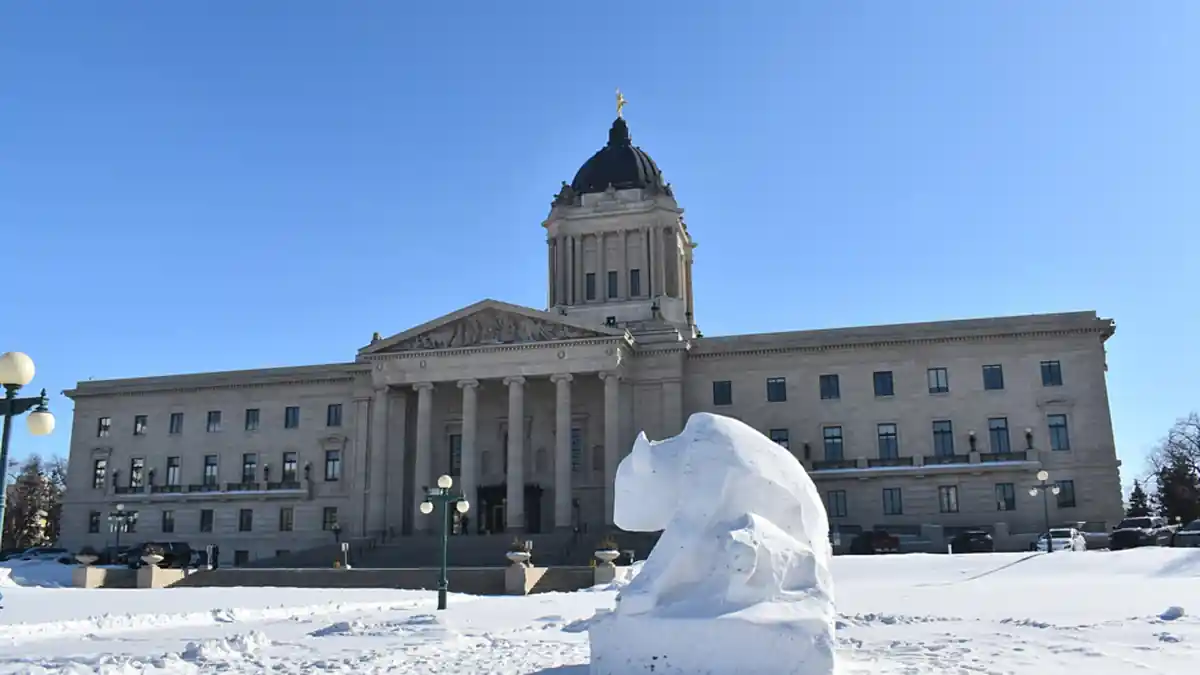
Twenty-six Manitoba civil society organizations published a joint letter to the provincial government on Jan. 29 and delivered it to Finance Minister Adrien Sala. Members gathered at the Legislative Building in Winnipeg that morning to set out their priorities before the spring budget.
The signatories include Climate Action Team Manitoba, the Canadian Parks and Wilderness Society’s Manitoba chapter, the Amalgamated Transit Union Local 1505, the Manitoba Eco-Network, Bike Winnipeg, the Wilderness Committee Manitoba chapter and the Manitoba chapter of the Canadian Association of Physicians for the Environment. Together, the release says, they represent thousands of workers, businesses and community members.
Their message was narrow and budget-focused. The province has published a climate strategy, they argue, but a strategy without funded programs will not cut emissions or protect land and water on the timelines the government itself has set.
Three areas where they want money spent
The coalition’s letter calls for investment in three areas. The first is energy efficiency, to reduce energy use, lower household bills and create green jobs. The second is transit and low-carbon transportation, which the groups link to affordability, mobility and health. The third is action to protect 30 per cent of Manitoba’s lands and waters by 2030, in partnership with Indigenous communities.
The transit case was made directly by the union that represents Winnipeg transit workers. James Van Gerwen, president of Amalgamated Transit Union Local 1505, called public transit one of the most effective climate tools available because it reduces reliance on cars and cuts emissions. He said the province needs to provide real, sustained operating investment, not only capital announcements.
On land protection, Ron Thiessen, executive director of CPAWS Manitoba, said the province’s 30-per-cent commitment must be matched by investment at the scale of the task. Protecting nature, he argued, fights climate change, safeguards biodiversity and supports Indigenous-led work that benefits all Manitobans.
Health voices were part of the coalition as well. Physician Ann Loewen, volunteering with the Canadian Association of Physicians for the Environment’s Manitoba chapter, pointed to health effects from floods, wildfire smoke and climate anxiety, and argued that Manitoba must change course on air, forest and water stewardship.
The numbers behind the criticism
The coalition’s central comparison is about priorities. Laura Cameron, director at Climate Action Team Manitoba, said the province has laid out a plan to reach net-zero emissions but has not backed it with money. Since taking office, the government has funded $73 million in emissions-reduction measures, according to the coalition, compared with $340 million spent on a one-year suspension of the provincial fuel tax in 2024 and roughly $1.15 billion on highway construction in 2024 and 2025.
Cameron also pointed to costs the province is already paying. Climate change, she said, is cutting into Manitoba’s bottom line, with hundreds of millions of dollars in costs from the previous year’s fires and drought. Balancing a single budget by deferring climate investment, she argued, shifts costs and losses onto the next generation.
Climate Action Team Manitoba had earlier put a figure on what it considers a credible start. Its budget briefing recommended the province increase climate-specific funding by at least $300 million in Budget 2026, an amount it described as about 1.2 per cent of budgeted provincial spending in 2025. That context matters because the January letter itself does not name a total — it names programs. The test, when the budget arrives, will be whether those programs receive operating and capital money large enough to change emissions, transit service and protected-area totals.
Environment Minister Mike Moyes responded briefly on Jan. 29, saying the province is hearing from many people as it puts together its spring budget. The government had published Manitoba’s Path to Net-Zero the previous fall. Whether Budget 2026 treats that document as a spending plan, rather than a statement of direction, is the question the coalition has now put on the record.

