

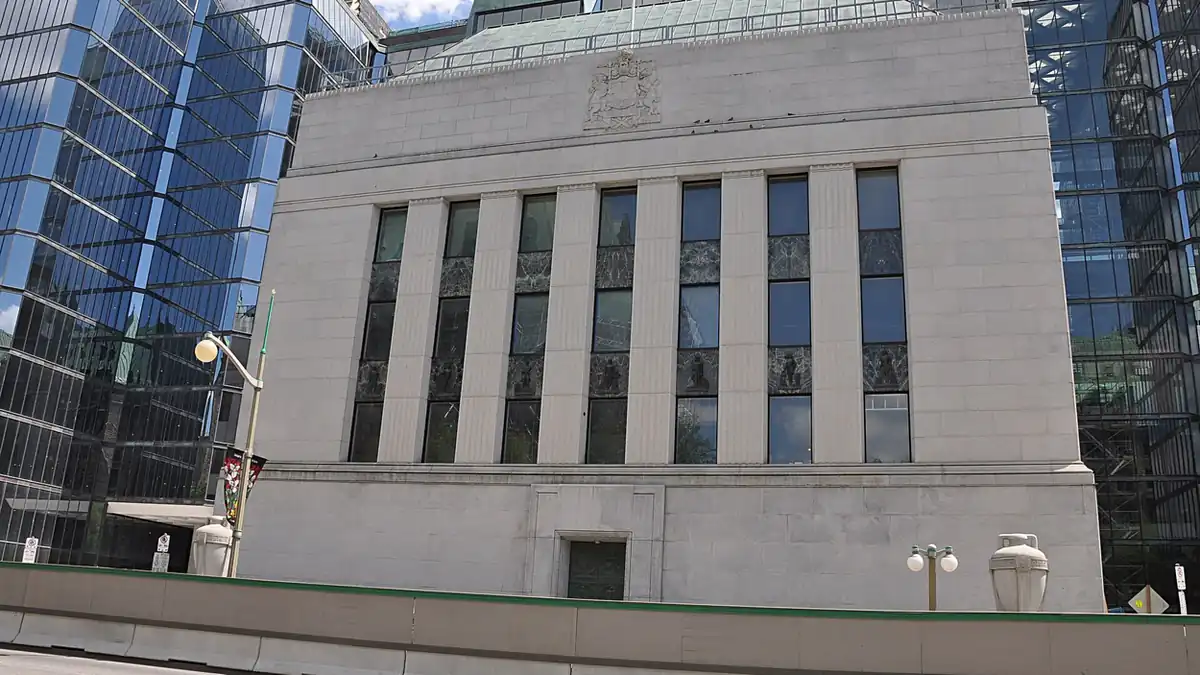
The Bank of Canada’s fourth-quarter Business Outlook Survey, released Jan. 19, 2026, shows business sentiment remains subdued after a weak year, but firms expect domestic sales growth to improve slightly. Most plan to maintain or reduce staffing, and inflation expectations are holding roughly stable between 2.5 and 3 per cent.
An economy in a holding pattern
The quarterly survey, based on interviews with leaders of about 100 firms, paints an economy that absorbed the shock of U.S. tariffs without collapsing — but is not growing with any conviction either. About one-third of firms reported that their sales volumes declined over the past 12 months. Export sales expectations remain modest, while the outlook for domestic sales brightened slightly.
The mood is measurably less bleak than it was. Only 22 per cent of firms said they are planning or budgeting for a recession in the next 12 months, down from 33 per cent in the previous quarter. At the same time, a growing share of companies expect to reduce their payrolls this year in response to trade uncertainty and soft demand, and most businesses plan to maintain or decrease staffing levels. Investment spending is being directed mainly at routine maintenance rather than expansion.
Firms reported less pressure than last quarter from tariff-related cost increases, and most do not anticipate substantial increases in their selling prices. Inflation expectations remain anchored within the Bank’s 1-to-3 per cent target range, “roughly stable between 2.5% and 3%,” according to the Bank.
Households are gloomier than businesses
The companion Canadian Survey of Consumer Expectations told a more cautious story. Its overall indicator declined slightly in the fourth quarter, as concerns over high prices and trade-related uncertainty continued to weigh on households, even though labour market conditions improved somewhat. Consumers’ expectations for near-term inflation remain higher than before the pandemic, while their long-term inflation expectations have eased below pre-pandemic levels.
That split — cautious households, stabilizing businesses — is the backdrop the Bank’s Governing Council carried into its Jan. 28 interest rate decision and Monetary Policy Report, the first of 2026.
Oil country feels the price squeeze
A special consultation with oil and gas leaders in Calgary underscored where the pain is concentrated. Producers expect West Texas Intermediate prices to hover around US$60 a barrel through 2026, with the discount on Western Canadian Select holding near US$12 thanks in part to the Trans Mountain expansion. Oil sands projects, with break-even prices averaging about US$50, remain viable, but conventional producers face tighter economics, and the sector expects capital spending to decline about 1.7 per cent in 2026 even as production rises on efficiency gains.
Firms were more optimistic about natural gas, pointing to LNG Canada exports and strong demand from oil sands producers. The Bank’s consultation also credited the Trans Mountain expansion with structural change: crude exports outside the United States have risen from under 3 per cent to more than 9 per cent since the pipeline opened, most of the increase going to Asia, which has supported Canadian heavy oil prices even as global benchmarks soften.
For the Bank, the message across both surveys was consistent: an economy bending under trade pressure and weak oil prices, but not breaking.

