

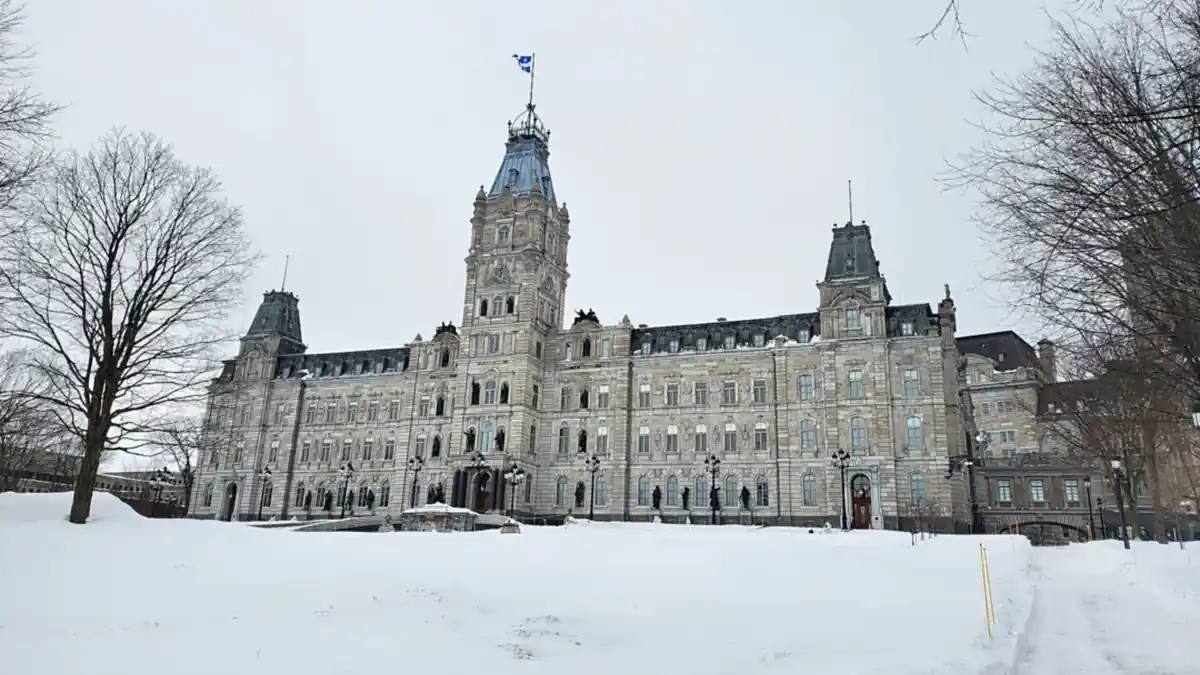
No candidate had officially declared when The Canadian Press surveyed the field on Jan. 21, 2026, but Justice Minister Simon Jolin-Barrette, Economy Minister Christine Fréchette and Environment Minister Bernard Drainville were all openly weighing a run to succeed François Legault as Coalition Avenir Québec leader and premier of Quebec.
A race the party has never held
Legault announced on Jan. 14 that he will step down once the CAQ chooses his replacement, ending more than seven years as premier. Because Legault co-founded the party in 2011 and has been its only leader, the contest will be the first leadership race in CAQ history.
The party said it would announce the rules for the race on Jan. 22. In the meantime, several senior ministers used a Jan. 21 cabinet day in Quebec City to signal where they stand — and several others took themselves out of the running altogether.
Simon Jolin-Barrette
First elected in Borduas in 2014 by just 99 votes, Jolin-Barrette has been a central figure in both CAQ mandates. As immigration minister he brought in Bill 21, the secularism law passed in 2019, and as justice minister from June 2020 he piloted Bill 96, the province’s updated French-language law, and created specialized tribunals for conjugal and sexual violence cases. He has also served as the CAQ’s parliamentary leader since October 2018.
“Over the past few days, I’ve spoken with several colleagues, some of whom have expressed their support and endorsement … and that’s very important because the CAQ is a team, it’s the third way,” Jolin-Barrette told reporters on Jan. 21, saying he was “seriously considering” running.
Christine Fréchette
Fréchette, a former U.S. political analyst and chamber of commerce president, entered politics in 2022 and won the riding of Sanguinet. She was named immigration and French-language minister on arrival in cabinet, then replaced Pierre Fitzgibbon as economy, innovation and energy minister in September 2024.
“The decision I’m currently making isn’t just a personal one; it’s also a collective process,” she told reporters on Jan. 21. “I’m taking the pulse of the situation, seeing how they see things,” she said of her colleagues, adding she would announce a decision soon.
Bernard Drainville
Drainville, a former journalist and radio host, brought a long political history to the field. First elected for the Parti Québécois in 2007, he served as minister for democratic institutions and introduced the PQ’s ill-fated charter of values before quitting politics in 2016. He returned in 2022 as a star CAQ candidate in Lévis, served as education minister and was moved to the environment portfolio in September 2025.
“I think we need to rely on experience, and I think we need to unite Quebecers, not bicker, and work with the other provinces to address the threats,” Drainville said on Jan. 21, adding he had his family’s green light to run but was waiting to see the rules of the race.
Two longer shots
François Bonnardel, the Granby MNA first elected under the Action démocratique du Québec banner in 2007, served as transport minister and then public security minister before being shuffled out of cabinet in September 2025 amid fallout from the cost-overrun scandal at the province’s auto insurance board. Asked about running, he said it was “much too early” and that he first needed to see the race rules.
Jean-François Simard, a sociology professor first elected for the PQ in 1998 and returned to politics with the CAQ in 2018, became natural resources minister and minister responsible for the Quebec City region in September 2025. He said the race “must be centred on ideas” and that he intended to contribute to it “in one way or another.”
Who has bowed out
The list of ministers declining to run was already long by Jan. 21. Public security and Indigenous affairs minister Ian Lafrenière announced that day he would not seek the leadership. Finance Minister Eric Girard, Education Minister Sonia LeBel, Municipal Affairs Minister Geneviève Guilbault and International Relations Minister Christopher Skeete had also withdrawn from consideration. Businessman Olivier Primeau had announced on Jan. 16 that he would not run either.
How the field narrowed
The wide-open field did not stay wide for long. Drainville formally launched his campaign on Jan. 24, Fréchette followed on Jan. 25, and by Jan. 26 Jolin-Barrette, Bonnardel and Simard had all confirmed they would not run, leaving a two-person contest. Fréchette went on to win the leadership on April 12 with 57.9 per cent of the vote, becoming CAQ leader and Quebec premier ahead of the October provincial election.

