

The Federal Court of Appeal ruled on Jan. 16, 2026, that the federal government’s 2022 invocation of the Emergencies Act was unreasonable and beyond its legal authority, and that the emergency measures infringed the Charter rights to freedom of expression and protection against unreasonable search and seizure. The court dismissed every appeal of the 2024 ruling.
Every appeal dismissed
In its judgment, cited as 2026 FCA 6, a three-judge panel of the Federal Court of Appeal confirmed the conclusion Federal Court Justice Richard Mosley reached in January 2024: the decision to declare a public order emergency did not meet the Emergencies Act’s own requirements.
“We are of the opinion that every appeal before this court should be dismissed,” the panel wrote. The government had argued Mosley got it wrong; two public interest groups, the Canadian Civil Liberties Association and the Canadian Constitution Foundation, had argued his findings on Charter violations should have gone further; and a third set of plaintiffs had challenged his ruling on their standing. The court rejected all of it.
The legal test was not met
The Emergencies Act, which replaced the War Measures Act in 1988, allows Ottawa to take special temporary measures only where a national emergency “cannot be effectively dealt with under any other law of Canada” and where there are reasonable grounds to believe a threat to the security of Canada exists, as that term is narrowly defined in the CSIS Act.
The appeal court agreed with Mosley that the government’s reasons did not satisfy those tests on the record before it. The invocation was therefore unreasonable and ultra vires — beyond the authority Parliament granted.
On the Charter, the court confirmed two violations. The emergency regulations, which criminalized attendance at certain protests without distinguishing lawbreakers from peaceful bystanders, infringed freedom of expression under section 2(b). The economic order, which required banks to disclose customer information and freeze accounts of designated persons without court authorization, infringed section 8’s protection against unreasonable search and seizure. Neither breach was justified under section 1 of the Charter.
Four years after the convoy
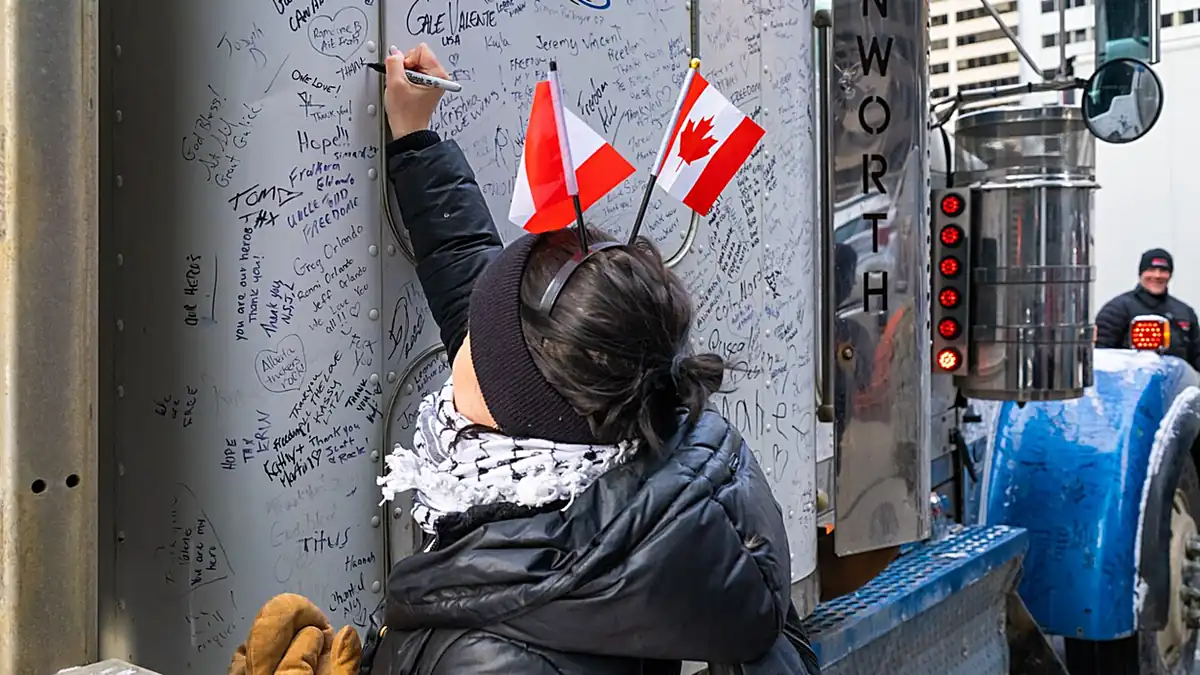
For about three weeks in January and February 2022, downtown Ottawa was occupied by protesters, many in large trucks blocking streets around Parliament Hill, demonstrating against COVID-19 health measures, while related blockades shut key border crossings. On Feb. 14, 2022, the government invoked the Emergencies Act for the first time in its history — allowing it to regulate public assemblies, designate secure areas, direct banks to freeze assets and ban support for participants. The declaration was revoked nine days later.
Four applications were brought to the Federal Court challenging the decision, producing the Mosley ruling in 2024 and now this appeal judgment.
What happens next
The ruling is binding unless overturned by the Supreme Court of Canada. The federal government moved to seek leave to appeal, and the Supreme Court later agreed to hear the case — setting up a final word on the only use of the Emergencies Act in Canadian history. Until then, the appeal court’s judgment stands: the thresholds Parliament wrote into the law to restrain emergency power were not met in February 2022, and two of the measures taken under it violated Canadians’ constitutional rights.

