

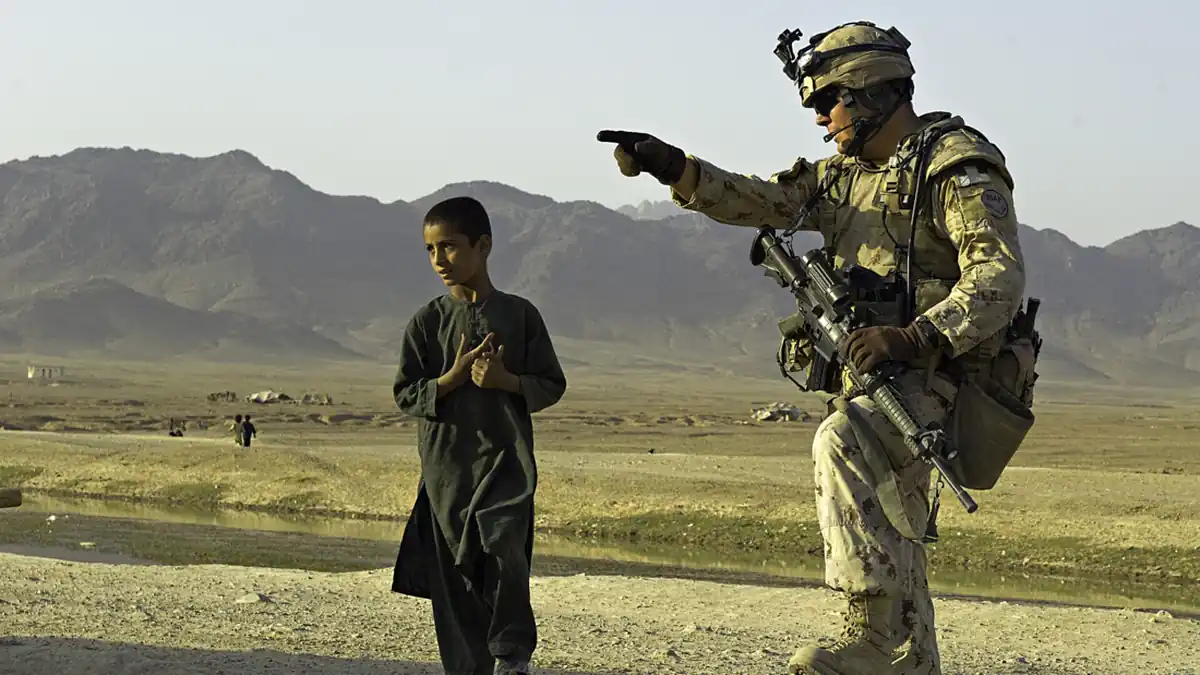
Canadian cabinet ministers, the prime minister’s office and veterans rejected U.S. President Donald Trump’s claim on Jan. 23, 2026, that NATO allies “stayed a little back” from the front lines in Afghanistan. Some 40,000 Canadians served there between 2001 and 2014, and 158 were killed.
‘There was no standing back’
Trump renewed his grievances against NATO partners in a Fox News interview on Thursday. “We’ve never needed them, we have never really asked anything of them,” he said. “They’ll say they sent some troops to Afghanistan, or this or that. And they did. They stayed a little back, a little off the front lines.”
The pushback in Canada was immediate. Defence Minister David McGuinty said in a statement Friday: “There was no standing back. Only standing side by side, together on the front lines with our allies.” McGuinty noted the Canadian Armed Forces were on the ground in Afghanistan from the beginning, and that Canadian troops led allied efforts, including combat operations in Kandahar.
Culture Minister Marc Miller, who served as a reservist in the Canadian Armed Forces in the 1990s, told reporters at the Liberal cabinet retreat in Quebec City that Canadians made “great sacrifices” in Afghanistan and that everyone knows Trump’s comments are “false.” Finance Minister François-Philippe Champagne said Canadians are proud of the Armed Forces’ service. “We don’t need comments from anyone else to know the strength of our Armed Forces,” he said. “They know what they did, we know what they did, the world knows what they did.”
Prime Minister Mark Carney had been scheduled to speak to reporters at the close of the two-day retreat Friday afternoon, but left before taking questions. His office issued a statement Friday evening noting the retreat took place at the Citadelle de Québec, headquarters of the Royal 22e Régiment — the Van Doos — who lost 14 of their members in Afghanistan. “This service and their sacrifice can never be diminished,” the statement said. “We remember those brave Canadians and honour the 40,000 Canadian Armed Forces members who served in Afghanistan between 2001 and 2014.”
Veterans answer
Conservative MP Michael Barrett, himself a veteran, noted the number of Canadian troops who served and died alongside U.S. soldiers in a post on X, tagging U.S. Ambassador Pete Hoekstra and the U.S. consulate in Toronto with an invitation to visit Parliament Hill and read the Books of Remembrance listing every Canadian killed in service.
Nigel Williams, a Canadian veteran of the war, told CBC News he felt “rage and anger and disappointment” at the comments. “Try to say that to a mother who buried a son, or a wife who buried her husband, or a husband who buried his wife. That’s not going to go over very well,” he said. Williams pointed to Canada’s role in Kandahar — a hotbed of Taliban activity — between 2005 and 2011. “Clearly his perspective is different on it than mine — I thought those were real bullets and real IEDs that was happening and exploding around us,” he said.
Fury across the alliance
Canada was not alone. British Prime Minister Keir Starmer said Friday he considers Trump’s remarks “insulting, and frankly, appalling,” and suggested the president should apologize. Starmer paid tribute to the 457 British personnel who died: “I will never forget their courage, their bravery and the sacrifice they made for their country.” The White House rejected the criticism, saying the United States has done more for NATO than any other country combined.
The war in Afghanistan was launched after the Sept. 11 terrorist attacks led the United States to invoke Article 5 of the NATO treaty — the clause stating that an attack on one member is an attack on all. It remains the only time in the alliance’s history that an ally has asked for, and received, support under Article 5.
Canada’s share of that response was concentrated in Kandahar province, where Canadian battle groups held one of the coalition’s most violent districts from 2005 until the combat mission ended in 2011; Canadian troops remained in a training role until 2014. Veterans Affairs Canada counts 158 Canadian Armed Forces members killed in the operation. It is that record — written in Kandahar, not behind the lines — that ministers were defending.

