

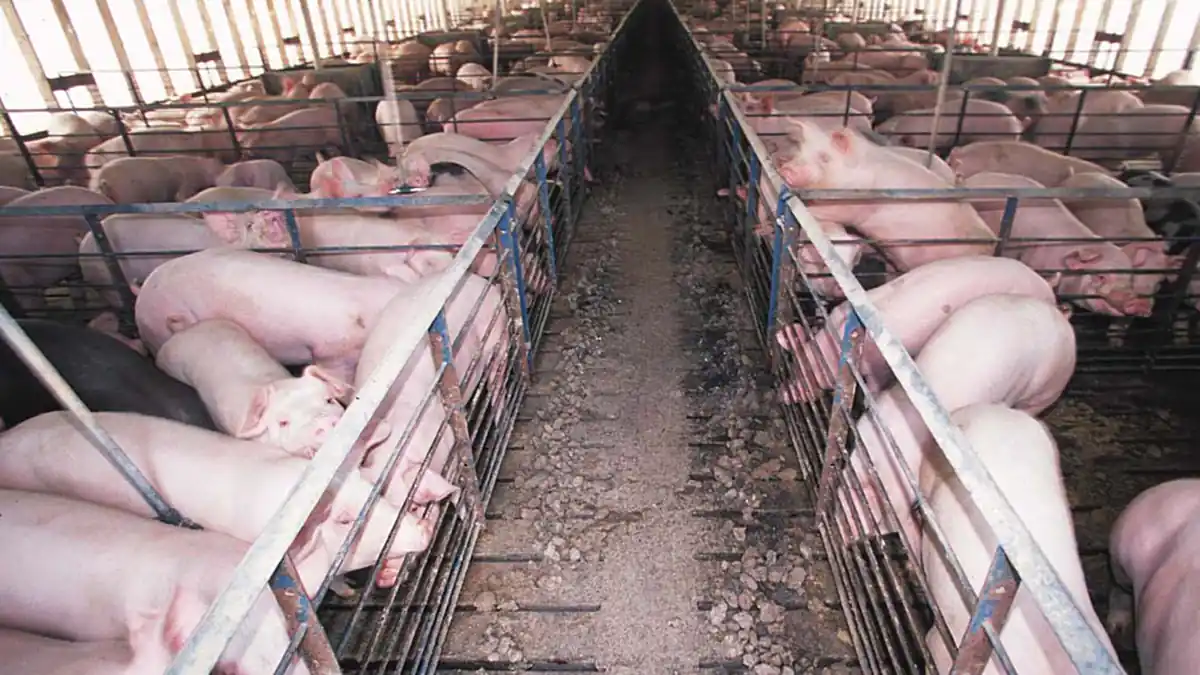
Health Canada and the Canadian Food Inspection Agency announced on Jan. 23, 2026, that pigs gene-edited by Genus PLC and PIC Canada to resist porcine reproductive and respiratory syndrome viruses are as safe and nutritious to eat as conventional pork, and safe for use in livestock feed.
A devastating virus, a precise edit
Porcine reproductive and respiratory syndrome viruses — PRRSV — are among the most devastating viruses affecting farmed pigs, causing breathing problems, fever, loss of appetite, stillborn piglets and death. There are currently no effective treatments, and vaccination has only been partially effective. The Canadian pork sector attributes about $130 million in annual losses to the disease.
The resistant pigs were produced by deleting a small part of a gene the virus uses to infect pigs’ cells, leaving the animals otherwise unchanged. Three federal reviews reached the same conclusion: Health Canada found foods from the pigs are as safe and nutritious as pork currently sold in Canada; the CFIA confirmed the pigs are safe and effective for use in livestock feeds; and the New Substances program, jointly administered by Environment and Climate Change Canada and Health Canada, determined in December 2025 that environmental and human-health risks from indirect exposure are no different from those of pigs already on the market.
“We have spent years conducting extensive research, validating our findings and working with the Canadian government to gain approval,” said Matt Culbertson, PIC’s chief operating officer. “Today marks a major milestone for consumers, farmers, and the entire pork industry who have hoped for relief from PRRS for decades.”
Approved here, but not yet for sale
Genus’s PRRS-resistant pigs are already permitted for food use in the United States, Brazil, Colombia and the Dominican Republic. Canada joins that list, but shoppers should not expect the pork on shelves soon: Genus has indicated it does not intend to sell the pigs before further regulatory authorization in other key markets. The company has said approvals are still required in Mexico and Japan — key export markets for North American pork — before commercial sales can begin in the U.S. or Canada.
That caution reflects the stakes for the sector. In 2024, Canada’s swine industry generated more than $6.3 billion in farm cash receipts; the country produced 2.34 million tonnes of pork and exported 1.45 million tonnes. As of Jan. 1, 2025, there were 13.9 million hogs on 6,885 Canadian farms. Improving resistance to PRRS, Ottawa said, will help farmers avoid illness in their herds, reduce antibiotic use and improve animal welfare, while supporting a more stable, affordable and sustainable food supply.
Gene editing, and the labelling question
The pigs are gene-edited rather than transgenic: no foreign DNA is introduced, and regulators concluded that aside from the precise deletion, the animals are no different from other pigs, with no difference in the nutritional value of the pork. Because Health Canada found no health or safety concerns, no special labelling is required — Canadian rules require labels only where there are well-established health risks or significant changes to nutritional qualities, such as an allergen that must be flagged.
Ottawa acknowledges consumers want information about genetic engineering regardless. The government has been working with the Canadian General Standards Board since November on a public review of the national standard for labelling and advertising of foods that are, and are not, products of genetic engineering — the voluntary standard the CFIA uses for its guidance to companies. Genus and Health Canada have committed to tell the public when the technology actually enters the Canadian market.

