

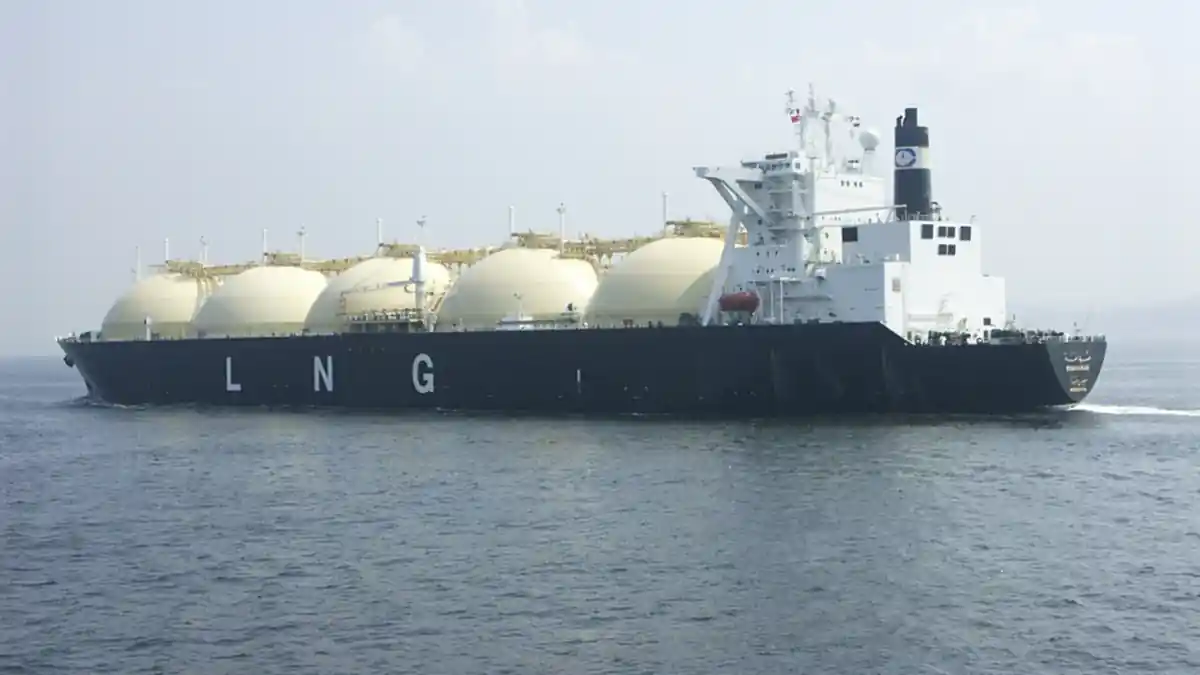
Canada and India relaunched their dormant ministerial energy dialogue at India Energy Week in Goa on Tuesday, pledging deeper two-way trade: Canadian crude oil, liquefied natural gas and LPG to India, and Indian refined petroleum products to Canada, alongside closer investment and clean-energy co-operation.
A dialogue brought back to life
Energy and Natural Resources Minister Tim Hodgson met India’s Petroleum and Natural Gas Minister Hardeep Singh Puri on the sidelines of India Energy Week 2026 in Goa, where the two issued a joint statement and formally relaunched the Canada–India Ministerial Energy Dialogue.
The mechanism was once the main channel for energy co-operation between the two countries, but it fell dormant amid the diplomatic rupture that followed the 2023 killing of Canadian Sikh activist Hardeep Singh Nijjar, which Ottawa blamed on agents of the Indian government — an allegation New Delhi has rejected. Its revival is one of the most concrete signs yet of the reset directed by Prime Minister Mark Carney and Indian Prime Minister Narendra Modi, who agreed at the G7 summit in Kananaskis last June to revive senior-level co-operation and restarted talks in November toward a comprehensive economic partnership agreement.
What each side is selling
“The Ministers affirm to deepen bilateral energy trade, including the supply of Canadian LNG, LPG, and crude oil to India, and the supply of refined petroleum products from India to Canada,” the joint statement said, noting the “complementary nature” of the two energy sectors.
For Canada, the door to Asia is the expanded Trans Mountain pipeline, which since 2024 has given Alberta crude a direct route to tidewater on the B.C. coast, alongside new LNG export capacity and growing LPG shipments from the West Coast. Hodgson framed the pitch in reliability terms. “We see an opportunity to work with India,” he said in Goa. “We are now building pipelines to the West Coast. We are looking to build more. We will never use our energy for coercion.”
Hodgson also noted that Canada once sent 98 per cent of its energy exports to a single country — the United States — and said his government is “committed to diversifying,” a priority that has sharpened as trade tensions with Washington escalate.
Puri, for his part, pointed to Canada’s crude reserves and its small modular reactor program, and said discussions are already underway between Oil India, the nodal agency for critical minerals, and Canadian counterparts.
Beyond oil and gas
The two ministers also committed to facilitating greater reciprocal investment in each other’s energy sectors and to exploring collaboration in hydrogen, biofuels, battery storage, critical minerals, electricity systems and the use of artificial intelligence in the energy industry.
The gap the deal has to close
The pledge starts from a low base. Two-way goods trade between Canada and India reached C$13.3 billion in 2024, but energy has barely figured in it: Canada does not currently export crude oil or LNG directly to India at all. India sources most of its oil from Russia, Iraq and Saudi Arabia, and its LNG mainly from Qatar, according to data from analytics firm Kpler. India accounts for just one per cent of Canada’s critical minerals exports.
The opportunity is the mirror image of that gap. India is projected to account for more than one-third of the growth in global energy demand over the next two decades, the largest contribution of any country. Carney is expected to visit India in the coming weeks as the two governments work to turn the reset into signed trade architecture.

