

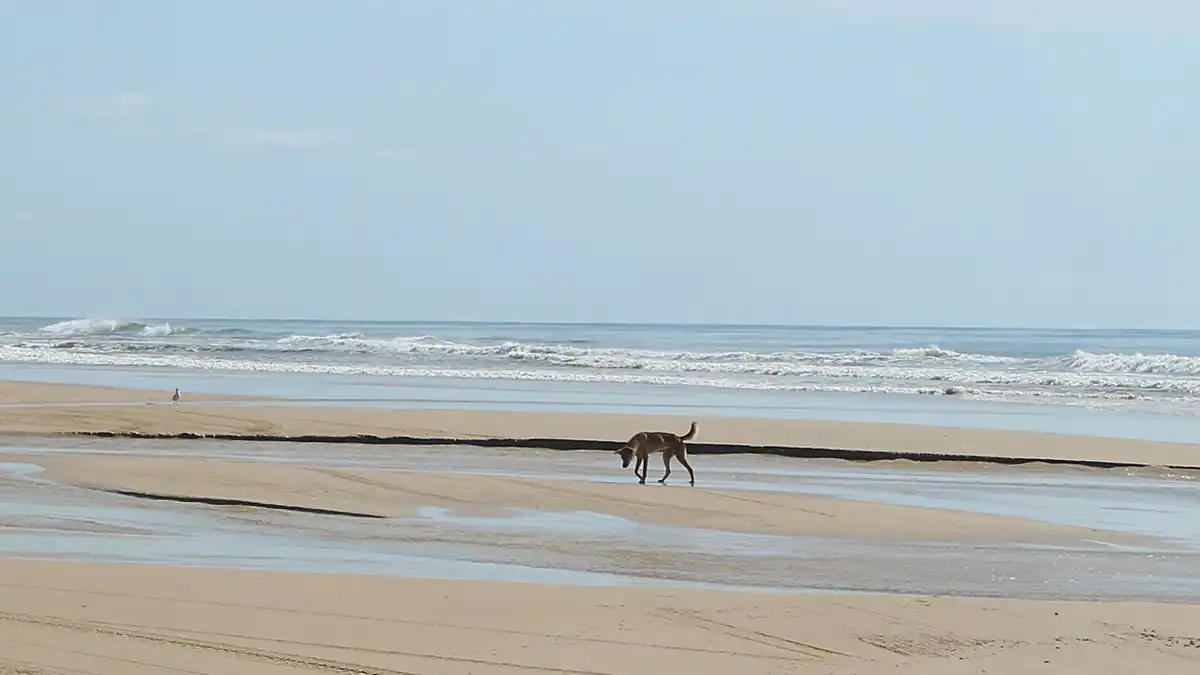
Australian police are investigating the death of a 19-year-old Canadian tourist whose body was found on a beach on K’gari, off Queensland’s coast, surrounded by a pack of about 10 dingoes. The RCMP confirmed she was a Canadian citizen, and Global Affairs Canada is providing consular assistance to her family.
Found on an early-morning beach
Queensland police said the woman’s body had been “interfered with” by a pack of about 10 dingoes on the beach on K’gari, the World Heritage-listed sand island off Australia’s east coast formerly known as Fraser Island. It was not initially known how she died.
Early reports suggested the woman may have gone for an early-morning swim on Monday, Jan. 19, before she was found dead by two men driving along the beach about 90 minutes later. Wide Bay District Inspector Paul Algie told reporters the men saw a large pack of dingoes surrounding an object and stopped to investigate, discovering it was the woman’s body.
The RCMP confirmed the woman was a Canadian citizen, and a spokesperson for Global Affairs Canada said officials were in contact with local authorities and providing consular assistance to her family.
Identified as a B.C. backpacker
The woman was later identified as Piper James, 19, of Campbell River, B.C. She had been travelling around Australia since October with a friend, also from Campbell River, and had found work on K’gari, a popular destination for backpackers.
A preliminary autopsy found evidence consistent with drowning, but also detected dingo bite marks from both before and after death — suggesting the pack may have forced her into the water. The Coroners Court of Queensland said the full investigation would take several weeks.
K’gari is home to a genetically distinct population of dingoes — called wongari by the Butchulla people, the island’s traditional owners — estimated at only 70 to 200 animals. The island receives roughly 450,000 visitors a year, and encounters between dingoes and people are a long-standing management challenge, particularly where animals have become accustomed to food scraps left by tourists.
A cull, a backlash and a coroner’s answer
Days after James’s death, the Queensland government announced that the pack of about 10 dingoes involved would be euthanized after rangers observed aggressive behaviour; six animals were put down over the Australia Day long weekend. Environment Minister Andrew Powell said the operation would continue.
The killings drew a sharp backlash. The Butchulla Aboriginal Corporation said the state had failed to consult traditional owners before euthanizing the wongari, calling it “unexpected and disappointing,” and wildlife experts warned the cull could harm the island’s small, isolated dingo population. James’s own parents publicly opposed a cull, saying it was the last thing their nature-loving daughter would have wanted.
In March, the coroner’s investigation reached its conclusion: a forensic pathologist determined, and the investigating coroner accepted, that James died by drowning in the setting of multiple injuries sustained in a dingo attack — closing the question that had hung over the case since January, but not the debate over how K’gari’s dingoes should be managed.

