

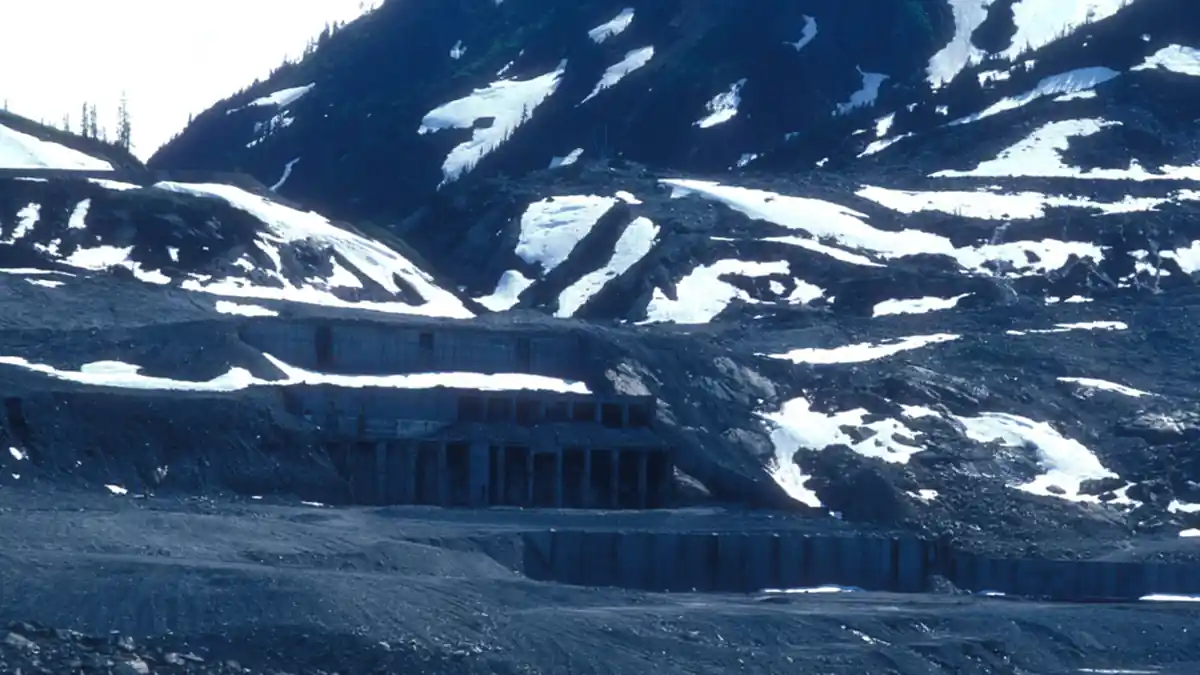
British Columbia issued an environmental assessment certificate on Jan. 26, 2026, to Eskay Creek Mining Ltd., a subsidiary of Skeena Gold+Silver, to restart gold and silver mining at the former Eskay Creek mine in Tahltan territory, following the first assessment in Canada guided by an Indigenous consent agreement.
A consent-based first
The province said its Environmental Assessment Office carried out a “collaborative assessment process” with the Tahltan Central Government (TCG), the first of its kind to be guided by a consent agreement — a milestone in government-to-government decision-making for major projects.
Environment and Parks Minister Tamara Davidson and Mining and Critical Minerals Minister Jagrup Brar made the decision after reviewing the EAO’s comprehensive report and recommendations, along with the Tahltan Risk Assessment Report. The TCG’s board of directors provided notice of Tahltan consent for the project under a consent-based decision-making agreement established under section 7 of both the Declaration on the Rights of Indigenous Peoples Act and the Environmental Assessment Act — an agreement signed in 2022 that was hailed at the time as the first in Canada made according to the United Nations Declaration on the Rights of Indigenous Peoples.
The ministers applied 38 legally binding conditions on the project. They include conditions co-developed with the Tahltan to mitigate impacts identified in the nation’s risk assessment — monitoring effects to fish and air quality and minimizing community effects in culturally appropriate ways — and provisions giving the Tahltan an ongoing role in monitoring compliance through the life of the mine. Many conditions, developed also with input from Skeena, require the company to incorporate Tahltan knowledge into plan development. Other conditions require monitoring and managing effects to water, fish, air quality and human health, and minimizing effects on local health services.
What the project promises
Provincial permits and federal approval are still required for the project to proceed, and those decisions are expected soon. Under the certificate, the Eskay Creek mine must be substantially started by 2036.
If approved, the project is expected to generate about 1,000 jobs during construction and more than 770 jobs during peak operations, along with projected capital expenditure of $713 million and approximately $1.2 billion in provincial revenues.
The original Eskay Creek mine, in northwestern B.C.’s Golden Triangle, was one of the highest-grade gold operations in the world during its years of production. Skeena’s plan would restart the site as an open-pit gold-silver mine.
Federal approval follows
The certificate concluded an environmental assessment process initiated in August 2024, which Skeena said included more than 60 engagement sessions in local communities, more than 500 meetings with the Tahltan Central Government, engagement with other Indigenous groups including the Nisga’a Lisims Government and Gitanyow Hereditary Chiefs, and more than 4,000 written comments from community members, each individually addressed.
On Jan. 27, Skeena confirmed the second half of the regulatory picture: the assessment results had been reviewed by Canada’s minister of environment and climate change and approved under the federal Impact Assessment Act. With Tahltan consent embedded within the provincial certificate itself, the company said major Mines Act permits were the next step — the practical test of whether a consent-based process can move a major mine faster than the adversarial reviews of the past.

