

Margaret Gray testified on Jan. 19, 2026, the first day of a 10-week public hearing into the death of her son Myles Gray, who died in 2015 after a confrontation with seven Vancouver police officers. She described learning of his death after she herself had called 911 to report him missing.
“I dropped on the ground and started screaming”
Myles Gray, 33, of Sechelt, was in Vancouver on Aug. 13, 2015, making deliveries for his floral business when an employee told his mother he had abandoned his work van, leaving his keys, wallet and thousands of dollars in product behind. Margaret Gray called 911 to report him missing — an unusual step, she told the dispatcher, for a son who did not simply wander off.
Instead of being shown her son, she testified, investigators showed her the necklaces he wore. “They were caked in mud and blood,” she said. “At that point, I dropped on the ground and started screaming and screaming and screaming.”
Gray had died after a confrontation with Vancouver police near the boundary with Burnaby, where he had been reported for spraying someone with a garden hose. He was in the midst of a mental health crisis — he had been diagnosed with bipolar disorder — and suffered injuries including ruptured testicles and fractures of his eye socket, nose, voice box and a rib. A paramedic at the 2023 coroner’s inquest testified his bruising was so severe he initially did not appear to be a white man. The inquest jury classified the death as a homicide, a neutral finding that assigns no blame. Forensic pathologist Dr. Matthew Orde concluded Gray would not have died that day had it not been for his interaction with police.
The officers were cleared — the commissioner ordered a hearing anyway
None of the seven officers was ever charged, and in October 2024 a discipline authority — Delta police chief Neil Dubord, appointed to hear the case — dismissed allegations of abuse of authority and neglect of duty against all of them.
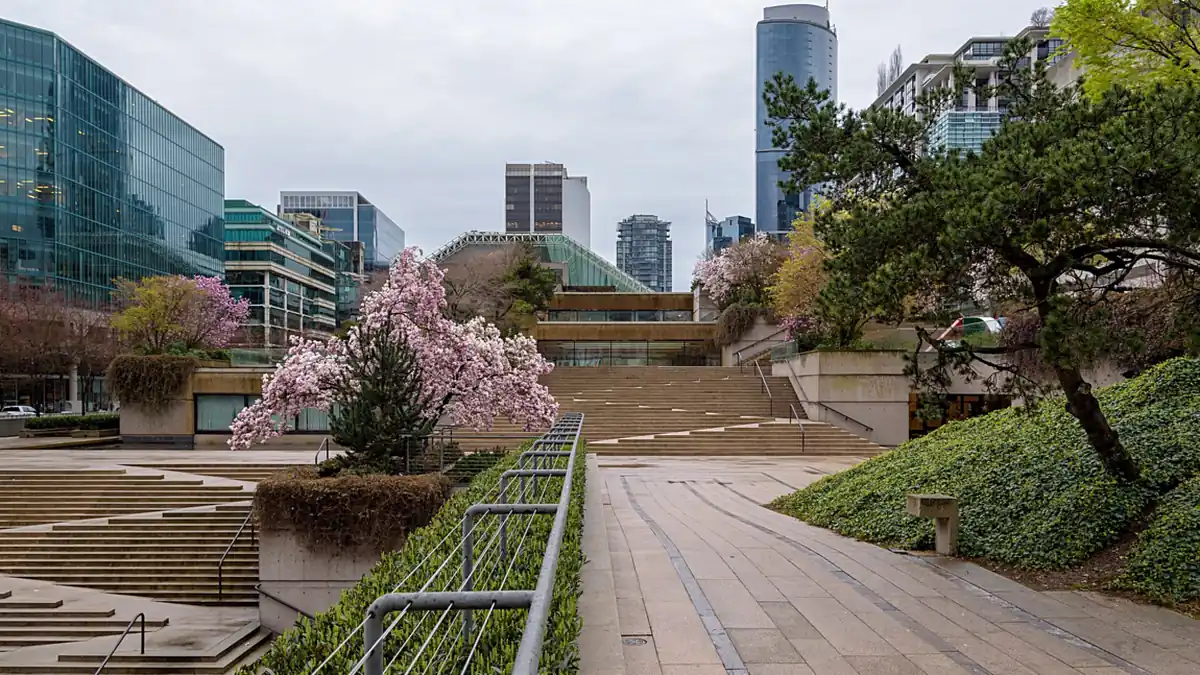
But B.C.’s police complaint commissioner, Prabhu Rajan, found “meaningful uncertainty as to what happened” and ordered a public hearing under the Police Act, the first real public airing of the evidence. The commissioner’s notice observed that the disciplinary framework is “strangely lopsided” — respondent officers can effectively choose who testifies — and that witnesses with potentially relevant evidence were never called. Retired B.C. Supreme Court judge Elizabeth Arnold-Bailey is presiding over the hearing at UBC Robson Square, which is expected to hear from 33 witnesses over 10 weeks.
Five of the officers — constables Eric Birzneck, Josh Wong, Beau Spencer, Hardeep Sahota and Nick Thompson — attended the opening day in person; constables Derek Cain and Kory Folkestad were absent for medical reasons. All seven deny the allegations. Whether any will testify is an open question: unlike a court, the complaint commissioner cannot compel respondent officers to take the stand.
Cross-examination, and a family still waiting
Lawyers for the officers cross-examined Margaret Gray about her son’s mental health and history of drug use. She said she had no knowledge of steroid use, disliked how marijuana changed his behaviour, and was unaware of assault and drug charges from 2004 and 2005. “He was never violent. He was never aggressive,” she said.
Outside the hearing room — where entry is through a metal detector — Gray’s sister Melissa remembered her brother’s humour and said his death “ripped apart” her family. “They killed someone, we did not, but yet we have to go through a metal detector?” she said. “My brother is a good person, and no one deserves this. Especially not somebody with mental health issues, because that’s not how you treat somebody.”

