

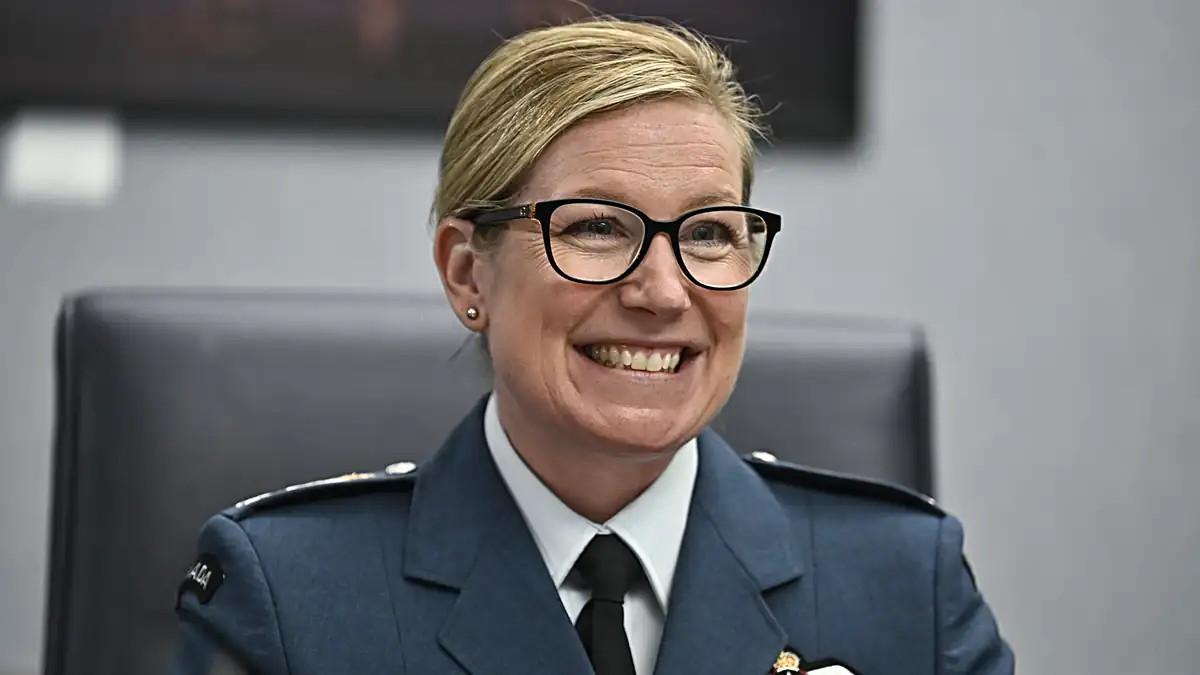
Royal Canadian Air Force commander Lt.-Gen. Jamie Speiser-Blanchet said on Jan. 8, 2026, that a 20 per cent entry-level pilot pay increase and new aircraft are helping retention and morale, even though the air force remains about 2,000 trained personnel short and pandemic-era early training delays have eased.
Pay and new aircraft are lifting morale, commander says
A substantial entry-level pay increase for pilots and the arrival of new and advanced aircraft are “absolutely” helping to shore up pilot retention and morale, Speiser-Blanchet said in a wide-ranging interview with The Canadian Press published on Jan. 8.
“When you talk about a pay raise like that, it absolutely had a positive effect on the retention of our personnel, including pilots,” she said. She was careful about the evidence: she described it as anecdotal, drawn from touring bases and speaking with members of the rank and file.
Prime Minister Mark Carney announced the military pay raise the previous summer. Military pay is complex and varies by rank, but for entry-level pilots the change amounts to about 20 per cent.
Fleet renewal is the second part of her account. “In the areas like the fighter force or the maritime patrol force and the others where they’re getting new aircraft, people are very excited, and so that is causing an excitement that you can actually see,” she said.
The air force is bringing in P-8 Poseidon aircraft to replace the Aurora maritime patrol fleet, with the first delivery expected this year. The CC-330 Husky is replacing the CC-150 Polaris, and some Huskies are already in service. Work is also under way to prepare for replacing the CF-18 Hornets, flown for decades, with F-35 stealth fighters.
“The Huskies — some of them are here and they are seeing that we’re not just talking about doing things,” Speiser-Blanchet said. “Things are actually happening. And I believe that is creating a positive sense of excitement. I know I certainly feel it.”
Still about 2,000 trained personnel short
None of that closes the personnel gap. The air force remains short of roughly 2,000 trained personnel, and some key trades have been staffed below levels the military considers a critical shortage.
There was one clear intake gain: recruitment exceeded attrition by 440 people in the last fiscal year. That net gain matters, but it does not erase a shortfall of about 2,000 trained members.
Fighter pilots remain the most closely watched group. Speiser-Blanchet called the fighter fleet the most fragile area for pilots, but said she was happy to report it had stabilized, after being the area of greatest concern. She described “significant progress” on fighter pilot numbers and said the work would continue to sustain the growth trend.
The air force says its CF-18 squadrons are staffed at 70 per cent of their establishment, and maintains it has enough fighter pilots to meet current demands and to manage the transition to the F-35.
Why the fighter shortage has lasted so long
The concern predates the current command team. A 2018 report by the federal auditor general warned the force had only 64 per cent of the trained CF-18 pilots it needed to meet the government’s requirement at the time, and said the problem could carry into the F-35 program. A 2025 auditor general report found the fighter pilot shortage persisted.
Pay changes made after the 2018 report also produced side effects. An internal National Defence review released publicly late last year said the revised structure caused frustration, prompted a cluster of grievances and led some captains to decline promotion because they could earn more than a major. Internal figures from the spring of 2025 put the shortfall at roughly 60 majors and about 50 captains.
Training delays have moved, not disappeared
The pandemic added a different bottleneck. Early training delays sometimes left new pilots waiting two or three years before they could advance — a pattern linked to higher attrition among early recruits.
“That kind of wait time is not happening anymore,” Speiser-Blanchet said. Delays still exist, she added, but they now appear in later stages of training and are easier to manage. At the more operational flying units, winged pilots can be employed in other useful ways while they wait to qualify on their specific aircraft type, rather than sitting idle.
The air force has also expanded fighter training with partners, including the International Flight Training School in Italy, where winged pilots complete fighter lead-in training before returning to fly the CF-18 — and, in future, the F-35.
Taken together, the commander’s account is of a force still short of people, but no longer losing ground in the same way: intake ahead of attrition, fighter numbers stabilized, and early training waits shortened.

