

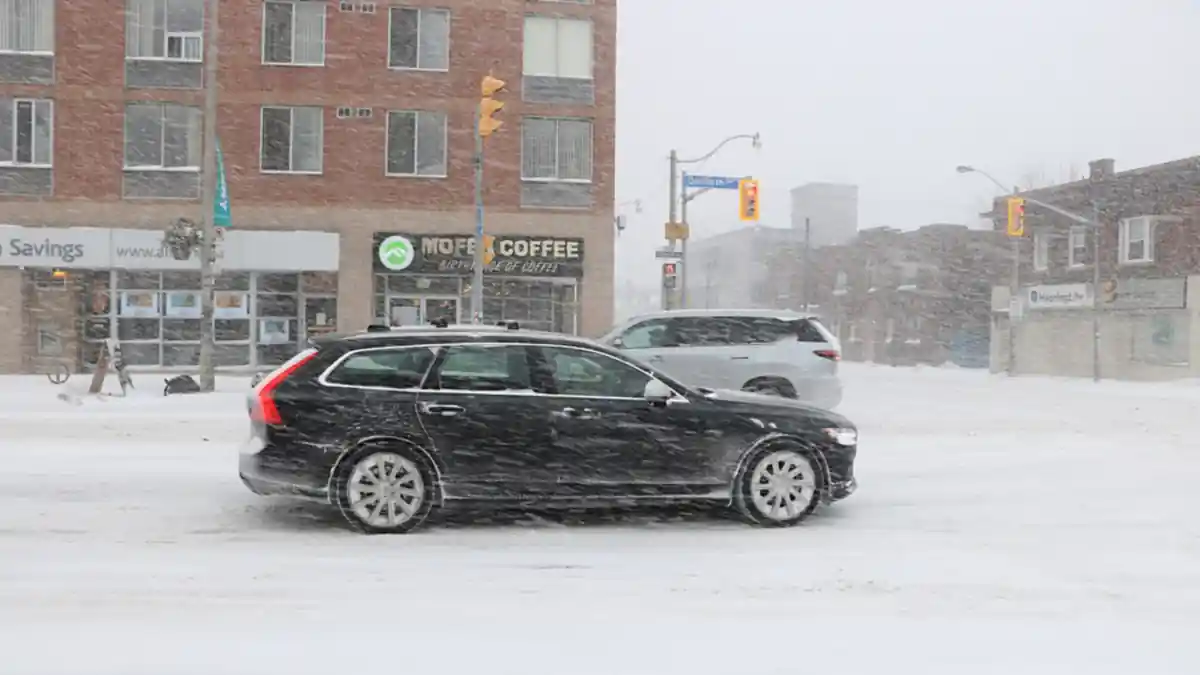
A record winter storm buried Toronto on January 25, 2026, dropping 46 centimetres of snow at Pearson airport — the most in a single day since records began in 1937. The storm pushed January’s total at Pearson to 88.2 centimetres, cancelled hundreds of flights and shut schools, transit lines and city services.
Records that stood for decades fall in a day
Environment Canada confirmed that 46 centimetres of snow fell at Toronto Pearson International Airport on Sunday, January 25, the highest single-day total at the airport since its records began in 1937. The old daily mark of 36.8 centimetres had stood since January 23, 1966.
Downtown, the Toronto City Centre station measured 56 centimetres, and Environment Canada’s later updated analysis put the core’s total at 61 centimetres. Meteorologists attributed the higher downtown amounts to lake-effect enhancement, as cold Arctic air picked up moisture crossing the relatively warmer waters of Lake Ontario and dumped it on the city. Some eastern districts, including Scarborough and Etobicoke, reported totals between 50 and 65 centimetres.
The single day was enough to rewrite the monthly record book as well. With 88.2 centimetres recorded at Pearson in January 2026, the month became not only the snowiest January on record but the snowiest calendar month of any kind at the airport since 1937. For comparison, January 1999 — the month of storms that led Toronto to call in the army — recorded about 63.2 centimetres at Pearson.
Heavy snow combined with strong winds produced near-whiteout conditions across southern Ontario, with temperatures at Pearson around -12 C and wind chills near -20 C.
Pearson grinds to a halt
The storm hit Canada’s busiest airport at full force. The Greater Toronto Airports Authority said about 65 per cent of departing flights and 64 per cent of arriving flights over the 24 hours from January 25 were cancelled — the worst single-day cancellation rate in Pearson’s history. More than 560 flights were cancelled on Sunday, and 146 more followed on Monday, pushing total cancellations past 700. Billy Bishop Airport on the Toronto Islands cancelled another 30 flights on Sunday.
The GTAA estimated between 75,000 and 100,000 passengers were affected. Air Canada alone cancelled more than 200 flights on Sunday and a further 117 on Monday. Airport snow crews worked around the clock with ploughs, dump trucks and snow melters across five runways and more than 190 gates, but operations were still running at roughly half capacity on Tuesday, with delays replacing cancellations as airlines worked through the backlog.
A city shut down
Toronto activated its Major Snow Event Response Plan for the second time in January, prioritizing arterial roads, emergency routes and transit corridors, and Mississauga closed many municipal facilities until at least noon on Monday.
Public school boards declared a snow day for Monday, January 26, and post-secondary institutions including the University of Toronto and Seneca Polytechnic cancelled morning classes. The TTC took sections of Lines 1 and 2 out of service and replaced them with shuttle buses, and the Line 6 Finch West light-rail line was suspended between Finch West and Humber College. The Toronto Zoo closed for the second time in as many weeks, and the Danforth Music Hall called off a Sunday evening Jessie J concert.
On the roads, Toronto Police reported 438 vehicle collisions in a 24-hour period, while Ontario Provincial Police handled more than 200 storm-related incidents, including roughly 150 vehicles that ended up in ditches.
The cleanup ahead
With no major new snowfall in the immediate forecast, city and airport crews turned to clearing streets, sidewalks and taxiways, warning that drifting snow and reduced visibility would linger. Officials cautioned residents to avoid non-essential travel while main routes were cleared — and reminded travellers to check flight status before heading to the airport, as the effects of a record-breaking weekend continued to ripple through schedules for days.

